Unraveling the Mystery: Why Did Vishnu Incarnate 10 Times as Dashavatara?
The Dashavatara—the ten primary incarnations of Lord Vishnu—fascinates millions worldwide. From Matsya the fish to the prophesied Kalki, these forms raise a profound question: Why did Vishnu, the Supreme Preserver of the universe, descend to Earth repeatedly? Did he curse himself to endure human-like births? Far from a self-imposed curse, Vishnu’s avatars represent a deliberate divine intervention. This isn’t random reincarnation but a purposeful strategy to restore cosmic balance, as outlined in ancient Hindu scriptures. In this guide, we’ll explore the “why” behind Vishnu incarnating 10 times, decode the Dashavatara sequence, and uncover timeless lessons for modern life.
Hindu mythology portrays Vishnu not as a distant deity but as an active guardian. The concept of Dashavatara addresses “why Vishnu incarnates 10 times,” symbolizing evolution from primal chaos to ultimate renewal. Let’s dive deeper into this cosmic blueprint.
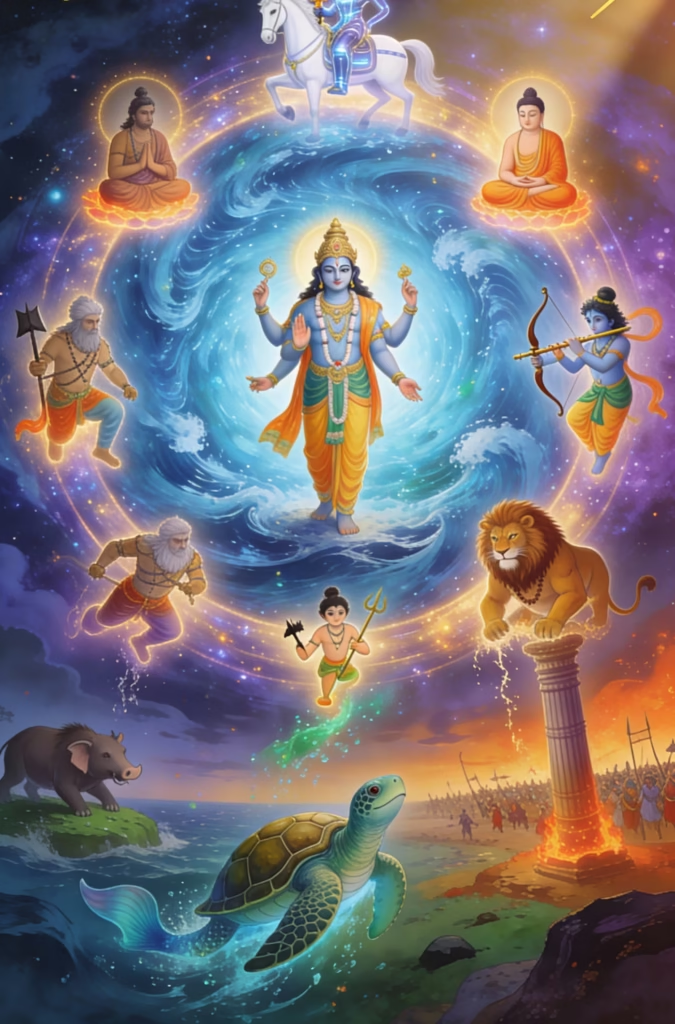
The Divine Promise: Vishnu’s Pledge from the Bhagavad Gita
At the heart of the Dashavatara lies a powerful verse from the Bhagavad Gita (Chapter 4, Verses 7-8), where Lord Krishna—Vishnu’s eighth avatar—declares:
यदा यदा हि धर्मस्य ग्लानिर्भवति भारत।
अभ्युत्थानमधर्मस्य तदात्मानं सृजाम्यहम्।
परित्राणाय साधूनां विनाशाय च दुष्कृताम्।
धर्मसंस्थापनार्थाय सम्भवामि युगे युगे।
Translation:
“Whenever there is a decline in righteousness (Dharma), O Bharata, and a rise in unrighteousness (Adharma), then I manifest Myself. For the protection of the good, for the destruction of the wicked, and for the establishment of righteousness, I come into being in every age.”
This isn’t a curse forcing Vishnu’s hand. Instead, it’s a voluntary descent driven by the universe’s rhythmic cycles of dharma (cosmic order) and adharma (chaos). Imagine the ocean: when storms rage, waves return to restore calm. Similarly, Vishnu’s ten avatars act as tidal forces, intervening precisely when humanity veers off course. No punishment or self-curse—pure cosmic responsibility.
The Magic of Ten: Completeness in Vishnu’s Dashavatara Sequence
Why exactly ten incarnations? In Vedic numerology, the number ten signifies purnata (completeness), mirroring the ten directions, ten vital airs (pranas), and the full cycle of creation. The Dashavatara sequence isn’t arbitrary; it evolves from aquatic origins to futuristic prophecy, mapping life’s progression through crises.
-
Evolutionary Mirror: Starting with Matsya (fish) in water, progressing to land-based Varaha (boar), then hybrid Narasimha (man-lion), and fully human forms like Rama and Krishna. This parallels Darwinian evolution but infused with spiritual purpose—addressing “Vishnu Dashavatara evolution theory” debates.
-
Yuga Cycles: Each avatar aligns with declining yugas (epochs), from Satya to Kali Yuga, tackling escalating moral decay.
-
Consciousness Ladder: They represent ascending awareness, from survival instincts to enlightened action.
This structured progression makes Dashavatara a “cosmic chronicle,” chronicling how existence frays and renews. Searching “Dashavatara order explained” often leads here, as it reveals Vishnu’s methodical approach to universal healing.
Beyond the Curse: Dharma’s Collapse as the True Catalyst
The idea of Vishnu “cursing himself” to be born ten times stems from a metaphorical twist. In truth, the real “curse” is adharma’s spread—greed, corruption, violence, and ethical erosion that plague societies and souls. When these forces dominate, the divine responds not out of obligation but love.
Picture this: A king watches his realm crumble from neglect. He doesn’t lament a curse; he arms himself and rides into battle. Vishnu does the same, scaling it to infinity. In personal terms, we’ve all faced it—job loss, broken relationships, societal unrest. These are micro-yugas, summoning our inner avatar. Vishnu’s descents remind us: Intervention isn’t weakness; it’s the universe’s reset button.
Dashavatara Decoded: Modern Lessons from Each Avatar
Each of Vishnu’s ten avatars offers a blueprint for today’s challenges. Here’s an elaborated look at their symbolism, blending mythology with practical wisdom for “Hindu avatars meaning in daily life.”
-
Matsya (Fish): Amid the biblical-style great flood, Vishnu as Matsya saves Manu and the Vedas. Lesson: Awaken from inertia. In chaos (like a career flood), seek knowledge to navigate survival.
-
Kurma (Tortoise): Supports the churning of the ocean (Samudra Manthan) for nectar. Lesson: Build stability amid turmoil. When life’s “churning” brings ups and downs, withdraw into resilience like a tortoise shell.
-
Varaha (Boar): Dives into the primordial waters to rescue Earth (Bhudevi) from demon Hiranyaksha. Lesson: Rescue the lost. Dive into personal abysses—addiction, failure—to reclaim your grounded potential.
-
Narasimha (Man-Lion): Tears apart tyrant Hiranyakashipu at twilight, on a threshold. Lesson: Hybrid ferocity. When rules fail (toxic workplaces), unleash calculated strength without full destruction.
-
Vamana (Dwarf Brahmin): Tricks demon-king Bali with three humble steps, reclaiming the universe. Lesson: Humility triumphs. Topple egos not with force, but clever, ethical strategy.
-
Parashurama (Warrior-Sage): Wields an axe to eradicate corrupt Kshatriyas 21 times. Lesson: Systemic reform. Fight injustice with disciplined rage, but temper it with sage wisdom.
-
Rama (Ideal King): Embodies maryada purushottama (perfect man) in the Ramayana, upholding dharma through exile and war. Lesson: Relational duty. Navigate family and societal dramas with integrity.
-
Krishna (Divine Statesman): Guides the Mahabharata war, delivers the Gita. Lesson: Strategic wisdom. In ethical battles, surrender ego for higher purpose.
-
Buddha (or Balarama): Promotes non-violence and enlightenment (in Vaishnava traditions). Lesson: Inner liberation. Release attachments; cultivate compassion amid materialism.
-
Kalki (Future Warrior): Rides a white horse with a flaming sword to end Kali Yuga. Lesson: Ultimate renewal. Prepare for collective transformation—discard the obsolete for a golden age.
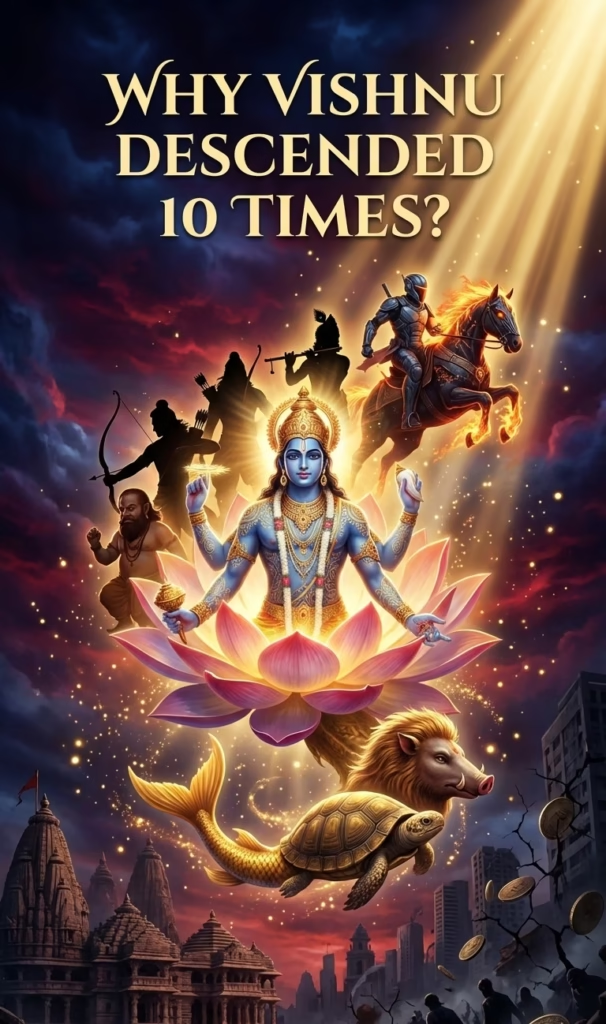
These interpretations transform Dashavatara from myths into “Vishnu avatars life lessons,” urging self-reflection: Which avatar resonates with your current struggle?
Why Dashavatara Matters in the Modern Kali Yuga
Today, as climate crises, political divides, and mental health epidemics echo adharma, Vishnu’s ten incarnations feel urgently relevant. Personally, repeating patterns—like toxic habits or career ruts—signal your inner yuga cycle. The avatars whisper: Embody change. Don’t wait for external saviors; channel Matsya’s vigilance or Krishna’s counsel.
Societally, failing institutions demand Kalki-like overhauls. Dashavatara SEO searches spike because they offer hope: Divinity doesn’t abandon; it adapts. In a world “going off the rails,” recognize the avatar call. You’re not cursed—you’re chosen to restore balance.
Vishnu’s descents promise renewal. No darkness is final. Ask yourself: “Which avatar am I summoned to become?” This is your signal to take action and uphold dharma in your domain; it’s not a spectacle.
for articles visit our spiritual section