The Evolution of Aviation Pilot Uniforms: From Military Roots to Modern Stripes
Aviation, one of the most transformative modes of transportation, traces its origins to military applications. In the early 1900s, aircraft served as messengers between army units. By World War I, they evolved into devastating tools for aerial bombings, reshaping warfare. Post-1918, surplus military planes fueled civilian aviation’s rise. The first commercial flights in 1919 repurposed war-era technology, with ex-military pilots donning familiar uniforms to project authority and skill.
This military heritage directly influenced today’s pilot uniforms. Sharp cuts, peaked caps, and shoulder stripes evoke naval and army traditions, blending professionalism with a sense of command. Understanding pilot uniform stripes meaning reveals not just rank but aviation’s storied past. These symbols inspire passenger trust, signaling expertise amid the skies.
Why Stripes Became a Staple in Pilot Uniforms
The iconic stripes on pilot shoulders and cuffs stem from the 1930s, popularized by Pan American Airways (Pan Am). As detailed in Barnaby Conrad III’s Pan Am: An Aviation Legend, Pan Am’s founder Juan Trippe sought to elevate commercial flying’s image. He modeled pilot attire after U.S. Navy officers—crisp white shirts, dark jackets, gold stripes, and visored caps—to convey reliability during aviation’s risky early days.
Pan Am’s design caught on quickly. By the 1950s, airlines worldwide adopted similar uniforms, standardizing the look. Over decades, fabrics modernized (e.g., wrinkle-resistant synthetics), and styles adapted to gender diversity, but core elements persist: the structured jacket, cap, and aviation rank stripes. These haven’t changed much because they work—passengers associate them with safety and leadership, boosting confidence on every flight.
Search trends like “origin of pilot stripes” highlight enduring fascination. Stripes aren’t mere decoration; they’re a visual hierarchy borrowed from maritime ranks, where gold bars denoted authority at sea. In aviation, they adapted seamlessly, ensuring clear command in high-stakes cockpits.
Commercial Pilot Ranks in Spain: Decoding the Stripes
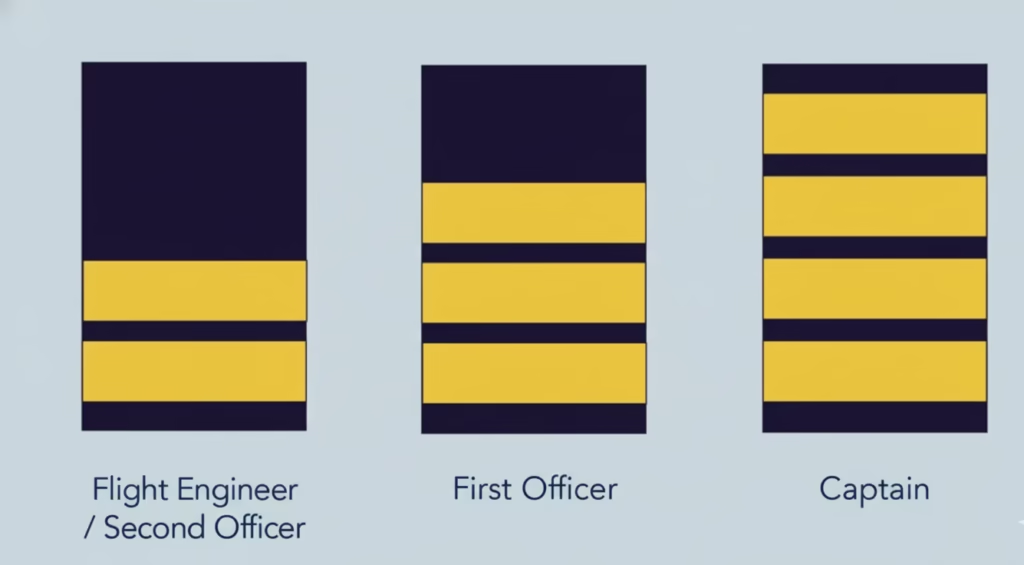
In Spain, commercial pilot ranks Spain follow international norms but vary slightly by airline like Iberia or Vueling. Epaulets on shirts and jacket sleeves use gold (or silver) bars to denote hierarchy. Here’s a breakdown:
-
4 Bars (🟨🟨🟨🟨): Reserved for the Captain, the ultimate authority aboard. A central star signifies the Pilot in Command (PIC) if two captains fly together—one handles copilot duties but retains full rank privileges. Captains oversee all operations, from pre-flight checks to emergencies.
-
3 Bars (🟨🟨🟨): Worn by the First Officer or Copilot. They assist the captain, manage navigation, and can take controls during routine phases. Promotion to this rank requires thousands of flight hours and rigorous simulator training.
-
2 Bars (🟨🟨): Rare today, once assigned to Flight Engineers or Second Officers on older jets with three-person crews. Modern fly-by-wire aircraft eliminated this role, making 2-bar insignia mostly historical.
-
1 Bar (🟨): Typically for junior pilots or Cadets in training programs. Airlines like Ryanair use it for First Officers in early career stages.
These pilot rank stripes ensure instant recognition, vital in noisy cockpits or diversions. Spanish regulations (via AESA, Spain’s aviation authority) don’t mandate specifics, allowing airline flexibility while prioritizing safety.
Do Aviation Students Wear Stripes?
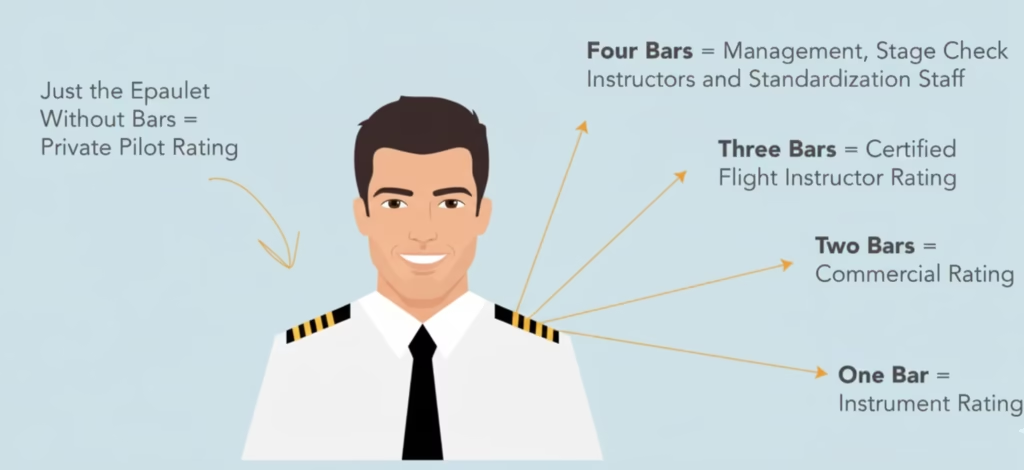
Yes, many flight schools award stripes to licensed students. After earning a Private Pilot License (PPL) or Instrument Rating, trainees might sport 1-2 bars based on school policy. For instance, Madrid’s flight academies grant one bar post-solo flight, two after cross-country quals. This motivates learners and mirrors professional progression. However, these aren’t universal—some centers skip them to avoid confusion with commercial ranks.
Uniform Distinctions: Commercial vs. Private Pilots
Commercial pilots adhere to airline mandates. A Ryanair captain flaunts four gold bars; an EasyJet copilot wears three. Companies enforce uniformity via contracts, with stripes customized for branding—think Emirates’ sleek navy with ornate gold.
Private pilots, flying small Cessnas or Pipers, have no such rules. As sole operators, stripes are optional, often absent to keep a low-profile look. A private pilot might add one bar for personal flair or club tradition, but it’s not standard. FAA and EASA guidelines focus on licenses, not attire, emphasizing skill over symbols.
This contrast underscores aviation’s dual worlds: commercial precision versus private freedom.
Silver vs. Gold Stripes: Airline Choices Explained
Gold dominates pilot uniform stripes, symbolizing prestige. Yet silver appears too—Norwegian Air uses it fleet-wide for a modern vibe. Historically, Iberia dressed male cabin crew (stewards) in silver: one bar for stewards, two for chiefs. No global law dictates color; it’s corporate style. Gold evokes tradition, silver feels contemporary. Passengers rarely notice, but pilots appreciate the subtle nod to rank.
Why Pilot Uniforms Matter in 2026 Aviation
Today, amid sustainable fuels and AI-assisted flights, uniforms endure as trust anchors. Post-COVID, airlines refreshed designs for comfort—breathable fabrics, ergonomic fits—while retaining stripes. SEO data shows “pilot stripes meaning” spikes with viral cockpit tours on YouTube, blending nostalgia with curiosity.
For aspiring aviators in Spain or beyond, mastering ranks starts with ground school. Uniforms aren’t just cloth; they’re aviation’s DNA, linking WWI biplanes to supersonic jets.
more facts! visit Bulletinbuzzs