Two New Snake Species Discovered in India — With a Rare Scale Feature You’ve Never Seen
India’s biodiversity just got a remarkable addition. Scientists have identified two snake species never before recorded within the country’s borders — a landmark discovery that’s reshaping what we know about wildlife in India’s northeast.
Researchers from the Wildlife Institute of India (WII) in Dehradun have confirmed the presence of two rare keelback snake species, marking a significant milestone in the documentation of India’s reptile fauna.
The Two Newly Recorded Species
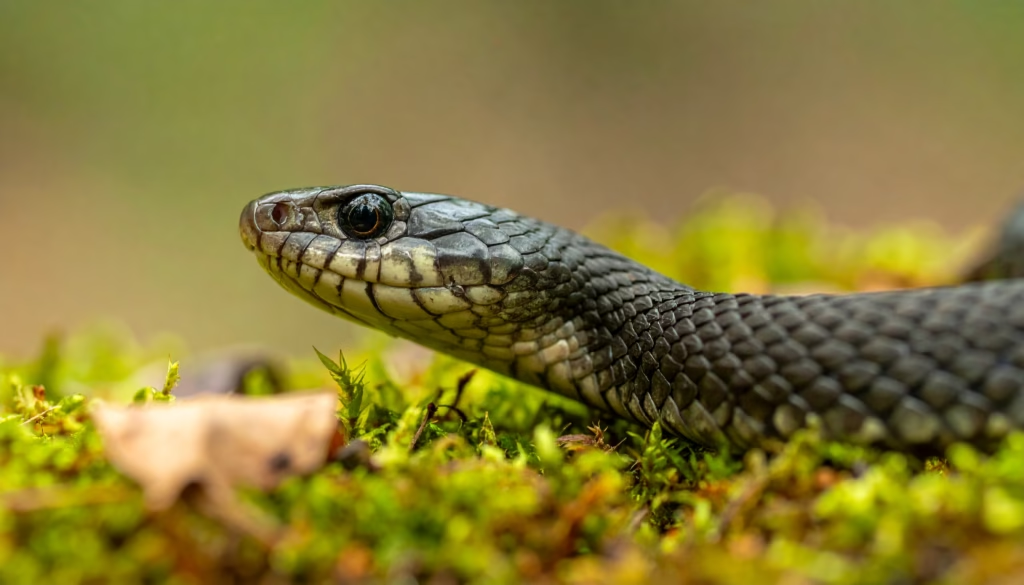
The study identifies the Rakhine Keelback (Herpetoreas davidi), found in Ngengpui Wildlife Sanctuary in Mizoram, and the Kachin Hills Keelback (Hebius gilhodesi), recorded in Namdapha National Park and Kamlang Tiger Reserve in Arunachal Pradesh. Until this discovery, both species were believed to exist exclusively in neighbouring Myanmar.
Why Northeast India Is a Biodiversity Goldmine
The discovery comes as no surprise to scientists who have long argued that India’s northeastern states harbour far more species than official records suggest. The dense forests of Mizoram and Arunachal Pradesh form part of a vast biodiversity hotspot that stretches continuously into Myanmar and Southeast Asia — a landscape so connected that species routinely cross international borders undetected.
“These findings underline how underexplored parts of northeast India still are,” researchers noted, adding that challenging terrain and limited scientific expeditions have left much of the region biologically undocumented.
What Makes a Keelback Snake Special?
Keelback snakes are generally non-venomous and are commonly found near streams, wetlands, and riparian forests. Their presence is widely regarded as a sign of a healthy, functioning ecosystem.
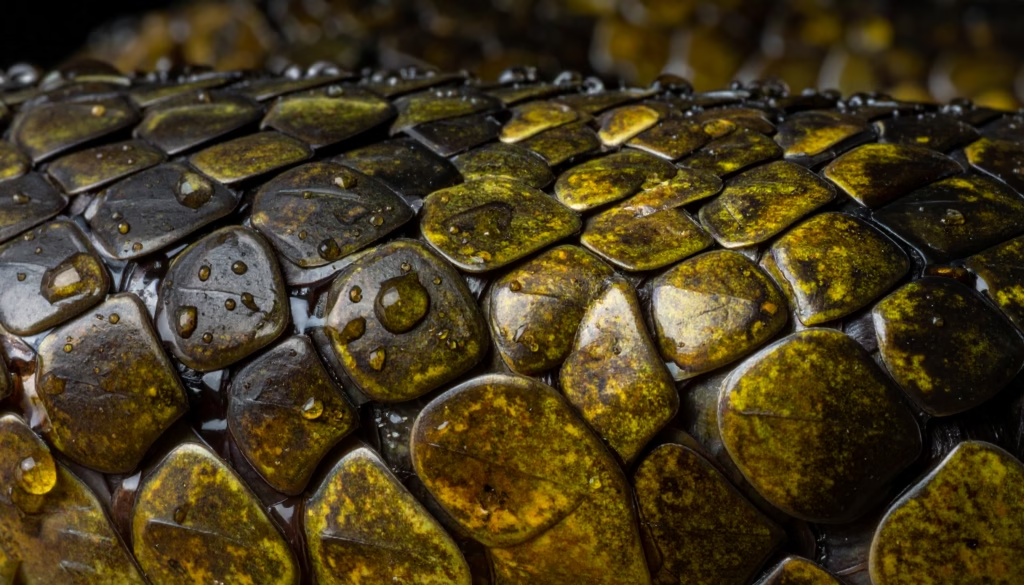
What truly sets them apart is a striking physical trait: keeled scales. Unlike the smooth, glossy scales seen on many other snake species, each keelback scale features a raised ridge running down its centre — giving the snake’s skin a noticeably rough, textured appearance.
This isn’t just an aesthetic quirk. The textured surface helps break up light reflections, allowing keelback snakes to blend seamlessly into their natural surroundings — leaf litter, muddy banks, and dense wetland vegetation. It’s natural camouflage engineered at the scale of individual skin cells.
Conservation Stakes Are High
The newly documented species are believed to inhabit moist, tropical forest environments — the very ecosystems now under mounting pressure from habitat loss and climate change.
The findings also spotlight the critical importance of protected areas like Namdapha National Park, widely regarded as one of India’s most species-rich reserves. Its extraordinary range of altitude and climate supports a staggering diversity of flora and fauna, making it a natural laboratory for ecological discovery.
Experts emphasise that species identification goes far beyond academic interest. Mapping where animals live is essential to designing smarter conservation strategies, allocating protection resources, and preventing biodiversity loss before it becomes irreversible.
More Discoveries Could Be on the Horizon
Scientists believe the two new keelback records are just the beginning. With sustained research investment, India’s northeast — often called a “biological treasure trove” — could reveal dozens of additional species currently unknown to science.
The discovery reinforces a broader scientific consensus: the borders we draw on maps do not limit the movement of wildlife. Cross-border ecological studies, like this one, are essential if we are to accurately understand — and protect — the natural world.
for more interesting articles visit BB