Tunnel and Ancient Remains Uncovered Near Puri Jagannath Temple
In a revelation that’s captivating history enthusiasts and archaeologists alike, a cutting-edge geophysical survey around the iconic Puri Jagannath Temple has unearthed evidence of hidden underground tunnels and buried archaeological treasures. Conducted in 2022, this ground-penetrating radar (GPR) study by IIT Gandhinagar points to structures that could predate or align with the temple’s 12th-century origins, rewriting our understanding of Odisha’s sacred landscape.
This breakthrough comes amid the ambitious Jagannath Heritage Corridor Project, sparking global interest in Puri Jagannath Temple archaeology. If verified, these findings could unveil secret passages, ancient drainage systems, or even links to maritime trade routes—offering a glimpse into the temple’s enigmatic past.
The Ground-Penetrating Radar Survey: How It Revealed Hidden Secrets
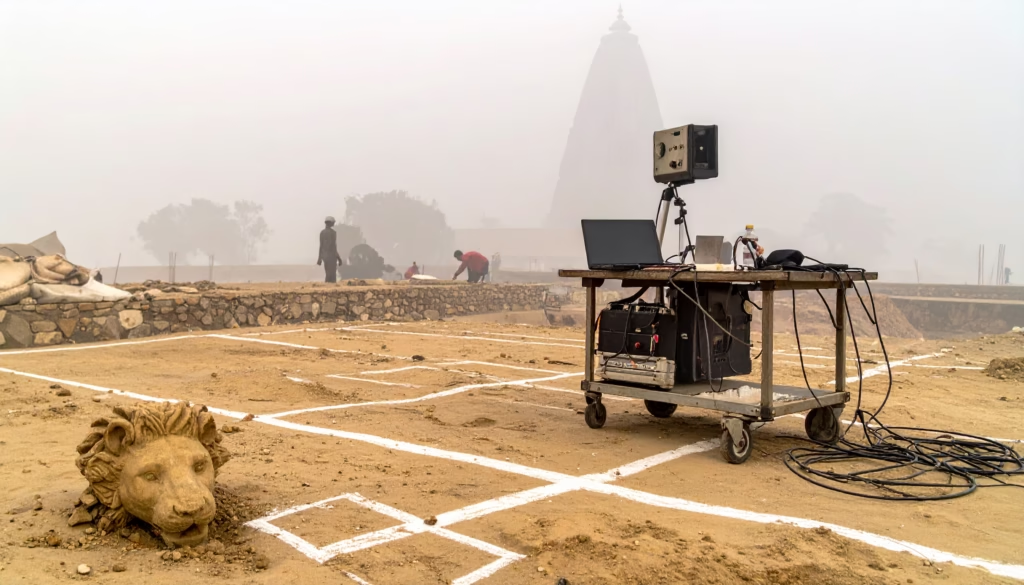
The survey, commissioned by the Odisha Bridge Construction Corporation (OBCC), employed state-of-the-art GPR technology to peer beneath the earth’s surface. Scanning up to 5 meters deep within a 75-meter radius of the temple’s outer walls, it detected subsurface anomalies signaling man-made structures.
Key highlights from the draft report:
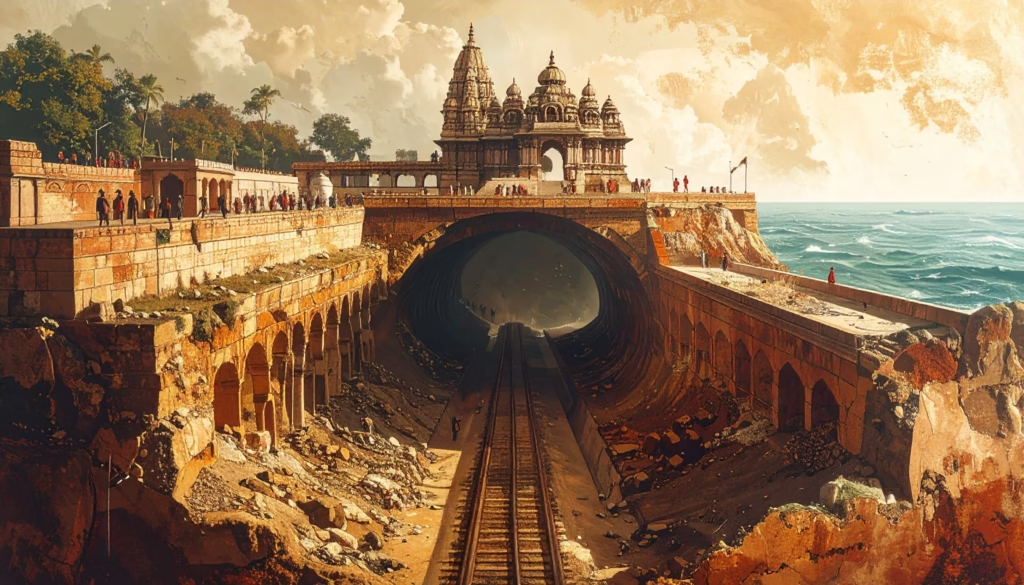
Tunnel-like feature in the southeast corner: A massive alignment spanning nearly 90 meters in length and up to 6 meters wide, stretching from the temple toward the sea beach.
Buried architectural remains: Variations in soil composition hint at monumental constructions, possibly walls, chambers, or pathways buried for centuries.
Affected zones: Includes the Emar Mutt site, Nurshingha Temple, Budhi Maa Temple, and the Jagannath Temple Road.
Experts describe this as an “underground network” that might function as an ancient drainage system or secret tunnel. The report urges further excavation: “This requires deeper probing to confirm any direct connection with the temple complex.” Such anomalies aren’t random—they suggest deliberate engineering from a bygone era.
For those searching “Puri Jagannath Temple tunnel discovery”, this isn’t isolated. GPR has revolutionized archaeology worldwide, from Egypt’s pyramids to India’s submerged cities like Dwarka, by non-invasively mapping what’s hidden below.
Trigger for the Survey: A Broken Lion Sculpture Sparks Inquiry
The probe kicked off in April 2022 after the Archaeological Survey of India (ASI) stumbled upon a fragmented lion sculpture during Heritage Corridor groundwork. This artifact emerged from the demolished Emar Mutt site, a hotspot now linked to the tunnel anomaly.
The Jagannath Heritage Corridor Project aims to widen roads, enhance pilgrim facilities, and preserve the temple’s sanctity. But construction halted briefly as ASI documented the find, prompting OBCC to greenlight the IIT-led survey. RTI activist efforts later surfaced the draft report, fueling public curiosity about Jagannath Temple underground structures.
This echoes past digs around Puri, where idols and pottery have surfaced, hinting at layers of history beneath the bustling pilgrimage hub.
What Could These Tunnels Mean? Expert Theories on Ancient Infrastructure
An anonymous archaeologist shared insights: “In antiquity, such tunnels served dual purposes—secret escape passages for royalty during invasions or sophisticated drainage channels to manage monsoons and tidal surges.” Given Puri’s coastal vulnerability, a waterway from temple to beach aligns perfectly.
Possible Functions of the Detected Tunnel
Drainage Mastery: Odisha’s heavy rains demand robust systems; this 90m feature could mimic ancient stepwells or Vedic-era conduits.
Strategic Passages: Temples like Jagannath often hid tunnels for priests to safeguard deities during raids, similar to Tamil Nadu’s Meenakshi Temple networks.
Maritime Links: Ending at the sea, it might connect to medieval trade ports, facilitating rituals or spice routes.
Pre-Temple Monuments: Structures predating the 12th-century Kalinga architecture could tie to Buddhist or Jain influences in early Odisha.
The report notes the feature’s “colossal” scale, rivaling Roman aqueducts in ambition. Further probes, perhaps with ASI oversight, could use LiDAR or excavation to confirm.
Historical Context: Puri Jagannath Temple’s Timeless Mysteries
The Sri Jagannath Temple in Puri, a UNESCO-recognized jewel, dates to the 12th century under King Anantavarman Chodaganga Deva. Perched on a 65-meter hill, its 214-foot Neela Chakra dominates the skyline, drawing 5-6 million Rath Yatra pilgrims annually.
Yet, legends whisper of older origins:
Tribal Roots: The Jagannath cult blends Vedic, Buddhist, and aboriginal traditions, with the wooden deities symbolizing universal divinity.
Mythical Tunnels: Folklore speaks of underground paths linking the temple to the beach for Nabakalebara rituals (deity rebirth every 8-19 years).
Colonial Clues: British surveys in the 1800s noted “subterranean vaults,” dismissed until now.
This Puri Jagannath Temple archaeological survey revives these tales, positioning it alongside Konark Sun Temple’s recent GPR finds. For SEO seekers on “ancient tunnels near Jagannath Temple”, it’s a goldmine of untapped history.
Broader Implications for Odisha’s Heritage Corridor Project
The Jagannath Heritage Corridor—a 500-crore initiative—seeks to decongest the 400-meter circumambulation path, install lighting, and create green buffers. Discoveries like this add layers:
Preservation Challenges: Work pauses for ASI clearances, balancing development with digs.
Tourism Boost: Verified tunnels could spawn a “Heritage Underground Trail,” rivaling Turkey’s Cappadocia caves.
Scientific Collaboration: IIT Gandhinagar’s role highlights AI-driven GPR, with potential for 3D modeling.
Odisha’s government now eyes integrated conservation, per CM Naveen Patnaik’s vision. Similar projects, like Varanasi’s Kashi Corridor, show how archaeology fuels eco-tourism.
Comparison: Global Temple Tunnel Discoveries
Site Discovery Year Feature Found Significance
Puri Jagannath 2022 90m tunnel-like structure Possible pre-12th century link
Meenakshi Temple 2010s Secret passages Escape routes from invasions
Angkor Wat 2010s Buried moats/tunnels Hydraulic engineering marvel
Ellora Caves Ongoing Underground networks Multi-faith connectivity
This table underscores Puri’s place in a global tapestry of hidden sacred engineering.
Challenges and Next Steps for Jagannath Temple Archaeology
Verification remains key. Rain, dirt, and contemporary trash can cause GPR to misidentify materials, although it can detect density shifts. Among the suggestions are:
Targeted Excavations: Start at the southeast anomaly.
Multi-Tech Approach: Combine GPR with magnetometry and soil coring.
Community Involvement: Engage local servitors (temple priests) versed in oral histories.
Digital Preservation: VR tours of findings to protect originals.
Critics worry over commercialization, but proponents see it elevating Odisha tourism SEO with keywords like “explore Puri Temple mysteries”.
Why This Matters: Cultural and Scientific Ripple Effects
For devotees, these buried remains around Puri Jagannath Temple affirm divine continuity. Scientifically, they challenge timelines, suggesting the site evolved from 5th-century roots. Economically, expect a surge in Puri heritage tours, boosting local artisans crafting Jagannath miniatures.
As RTI disclosures democratize knowledge, watch for ASI’s official nod. This isn’t just dirt underfoot—it’s a portal to India’s soul.
In summary, the 2022 IIT Gandhinagar survey transforms speculation into science, inviting the world to ponder: What other secrets guard the Lord of the Universe?
for more articles visit BB