Discover Coober Pedy: Australia’s Underground Opal Capital
Imagine a place where the scorching Australian sun beats down relentlessly, yet residents thrive in cool, comfortable homes carved straight into the earth. Welcome to Coober Pedy, the underground town in South Australia that’s redefining desert living. Nicknamed the “Opal Capital of the World,” this quirky destination draws adventurers, gem enthusiasts, and curious travelers eager to explore life underground in Australia.
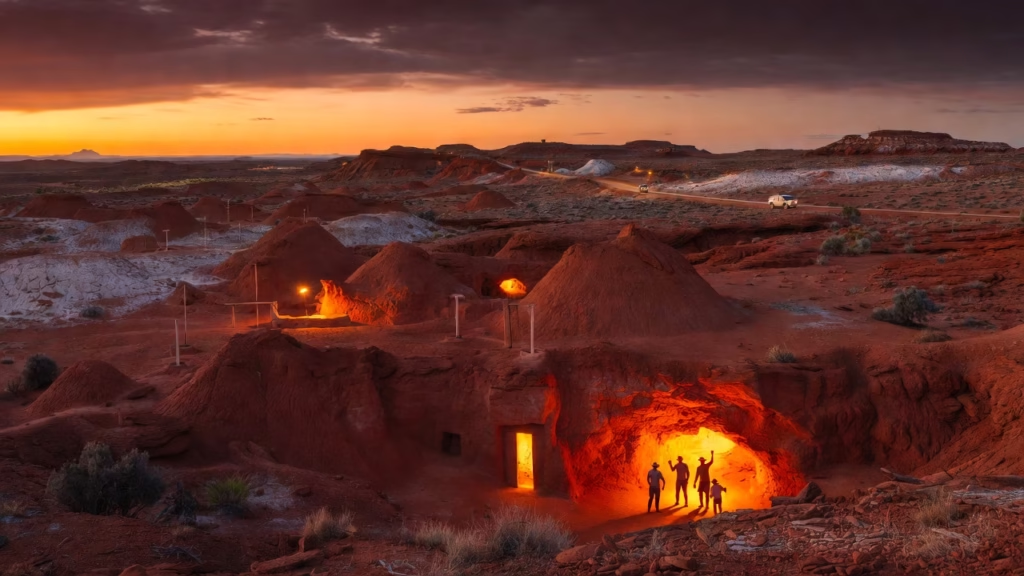
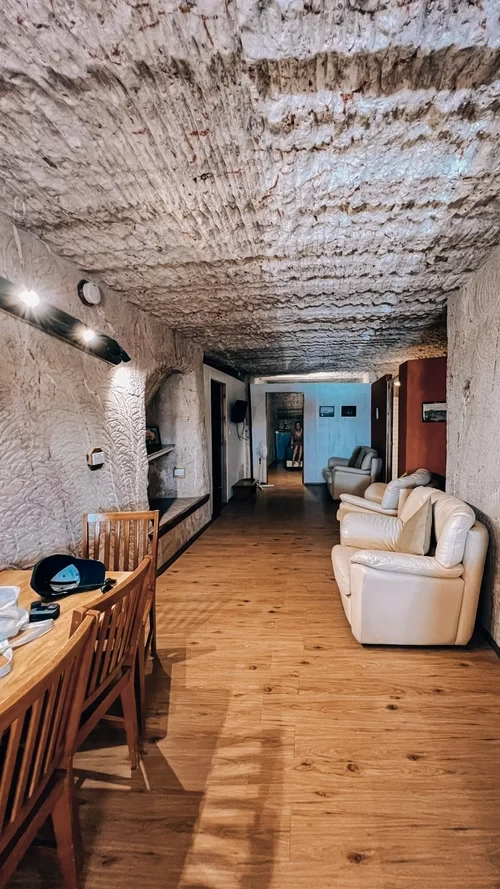
Located 846 km north of Adelaide along the Stuart Highway, Coober Pedy sits in the heart of the outback, producing up to 80% of the world’s opals. But what makes it truly unique? Over half the population—around 1,700 people—lives in dugout homes excavated from soft sandstone hills. These natural air-conditioned caves stay at a steady 21-25°C (70-77°F) year-round, shielding dwellers from summer highs of 50°C+ (122°F+). If you’re planning an outback road trip, Coober Pedy underground tours are a must-do.

The Accidental Discovery That Built a Town
Coober Pedy’s story began in 1915, not with grand plans, but a lucky fluke. Fourteen-year-old Willie Hutchison, son of a local pastoralist, was scouring the arid Stuart Ranges for water during a brutal drought. Instead of a well, his pickaxe struck something sparkling: the first opal deposit. Word spread like wildfire among prospectors, and within months, hundreds flooded the area.
By 1916, the rush was on. Miners staked claims in the opal-rich fields, turning barren desert into a boomtown. The name “Coober Pedy” derives from the local Aboriginal Yankunytjatjara word “kupa-piti,” meaning “white man’s hole”—a nod to the diggings that scarred the landscape. Today, over 1,500 opal mines dot the region, with active claims still yielding treasures worth millions annually.
This opal mining history in Australia isn’t just about riches; it’s a tale of resilience. Early settlers faced extreme isolation, water shortages, and wildlife hazards like venomous snakes and feral camels. Yet, the allure of black, white, and boulder opals—prized for their iridescent play-of-color—kept them coming.
Why Underground? Surviving the Outback Inferno
Above-ground life in Coober Pedy is no joke. Summer temperatures routinely hit 40-53°C (104-127°F), so hot that birds sometimes plummet from the sky, overcome by heat exhaustion. Dust storms whip through, and winter nights dip below freezing. Traditional houses would bake like ovens or freeze solid, making them impractical and costly to cool or heat.
Enter the underground homes of Coober Pedy. Pioneered by World War I veterans returning from trench warfare in Europe—including battles against the Ottoman Empire—these “dugouts” offered familiar sanctuary. Veterans, skilled at burrowing, hand-carved homes into mulga sandstone, using basic tools and explosives. The rock’s thermal mass provides perfect insulation: cool in summer, warm in winter, with minimal energy needs.
Modern Coober Pedy dugouts have evolved. Electricity, high-speed internet, and plumbing are standard. You’ll find underground bars like the Gravel Pub, churches such as the Serbian Orthodox one, and even the Desert Cave Hotel—a fully subterranean luxury stay with opulent suites. Some residents discover opals in their walls while expanding; one family unearthed a $50,000 boulder opal during a bedroom renovation!
-
Key benefits of underground living:
-
Constant 21-25°C temperature—no AC bills.
-
Dust-proof and cyclone-resistant.
-
Eco-friendly: Low energy use aligns with sustainable outback living.
-
Unique aesthetics: Glow-in-the-dark murals, opal-embedded furniture.
-
For visitors, options abound: Stay in a dugout B&B, join a mine tour, or shop for opals at the Umoona Opal Mine & Museum.
Road Trip to Coober Pedy: Navigating the Outback Highway
Reaching Coober Pedy is an epic Australian outback road trip. From Adelaide, it’s a 10-hour drive north on the sealed Stuart Highway (A87). Alternatively, from Alice Springs, it’s a straight 650-700 km shot westward, where the rusty red earth gradually fades into pale gibber plains.
Break up the journey at Glendambo, the “Halfway Oasis” 265 km south of Coober Pedy. Born in 1982 when the highway realigned, bypassing old Kingoonya, Glendambo offers fuel, roadhouse meals, and quirky attractions like a giant dinosaur skeleton. It’s your last stop before the longest facility-free stretch on the route—pure outback solitude with kangaroos bounding alongside.
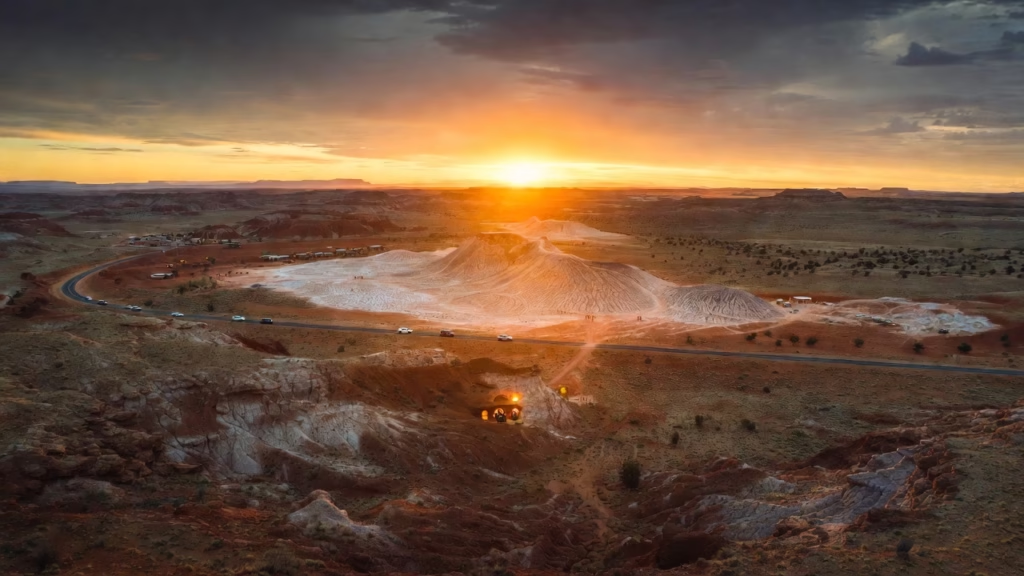
As you approach, the landscape mesmerizes: Vibrant red tarmac merges with ochre dunes, saltbush scrub, and distant hill silhouettes. Coober Pedy appears deserted at first—scattered motels, mine shafts, and mullock heaps (waste rock piles). But descend underground, and it buzzes with life: Art galleries, a drive-in cinema (the oldest in the Southern Hemisphere), and the annual Opal Fields Easter Festival.
Modern Coober Pedy: More Than Just Opals
Beyond opals, Coober Pedy attractions blend adventure and culture. The town supplies 80% of global opals, from fiery reds to milky whites, exported to jewelers worldwide. Visit Kanku-Breakaways Conservation Reserve for moon-like craters or take a Nostalgic Underground Tour through 1920s-era diggings.
Film buffs know it as a Hollywood set: Mad Max Beyond Thunderdome, Pitch Black, and Priscilla, Queen of the Desert shot here, capturing its eerie beauty. The Coober Pedy Opal Showroom lets you sift for gems, while the Old Timer’s Mine reveals 100-year-old tunnels.
Sustainability shines too. Solar farms power homes, and water from the Great Artesian Basin supports bore fields. Challenges persist—mining regulations, tourism fluctuations post-COVID—but community spirit endures. Aboriginal heritage tours highlight Anangu stories, tying the land to 40,000+ years of Indigenous history.

Living and Visiting: Practical Tips for Coober Pedy
Ready to experience underground living in Coober Pedy? Here’s what to know:
-
Best time to visit: April-October (mild 20-30°C days).
-
Avoid summer; rent a 4WD for unsealed tracks.
-
-
Accommodations:
-
Desert Cave Hotel (underground luxury).
-
Riba’s Underground Camping.
-
Surface motels like Quarry Manor.
-
-
Must-see spots:
-
Umoona Opal Mine: Hands-on opal cutting.
-
Big Winch Mine Tour: 85m underground adventure.
-
Faye’s Underground Home: Peek inside a real dugout.
-
-
Getting around: Free shuttle buses; bikes for short hops.
-
Opal shopping: Buy certified stones from licensed dealers to avoid fakes.
Health/safety: Carry water (2L/hour in heat), use sunscreen, watch for mine hazards (fenced but explore cautiously).
Why Coober Pedy Captures Hearts Worldwide
Coober Pedy isn’t just a town; it’s a testament to human ingenuity. In a world craving unique escapes, this underground Australian town offers respite from extremes—literal and figurative. Whether you’re an opal hunter, film fan, or eco-traveler, it challenges notions of “home.” Plan your trip via Tourism Australia or Drive South Australia sites for itineraries.
From Willie’s water quest to today’s thriving community, Coober Pedy proves treasure hides in unexpected places. Head “down under” to this opal wonderland—your outback adventure awaits.
liked this article? Visit Daily for MORE