Unraveling the Bermuda Triangle Mystery: Science Debunks Alien Theories
For generations, the Bermuda Triangle has captivated imaginations with stories of ghostly vanishings, alien interventions, and portals to lost worlds like Atlantis. This notorious ocean region, roughly outlined by Florida, Bermuda, and Puerto Rico, has been blamed for countless disappearances of ships and planes. But what if the real story is far less supernatural? Modern science, backed by experts like Australian scientist Karl Kruszelnicki, reveals that the Bermuda Triangle mystery explained boils down to natural forces, human mistakes, and statistical illusions—not extraterrestrial plots.
Popular lore paints the Bermuda Triangle as a cursed zone where vessels evaporate without a trace and aircraft blink out mid-flight. Yet, rigorous investigations show no extraordinary peril here. Organizations like the US National Oceanic and Atmospheric Administration (NOAA), Lloyd’s of London insurers, and the US Navy all agree: disappearances in this area match global averages. Kruszelnicki, a physicist and science communicator, has dedicated years to dissecting these tales, proving that probability and physics tell a more grounded story.
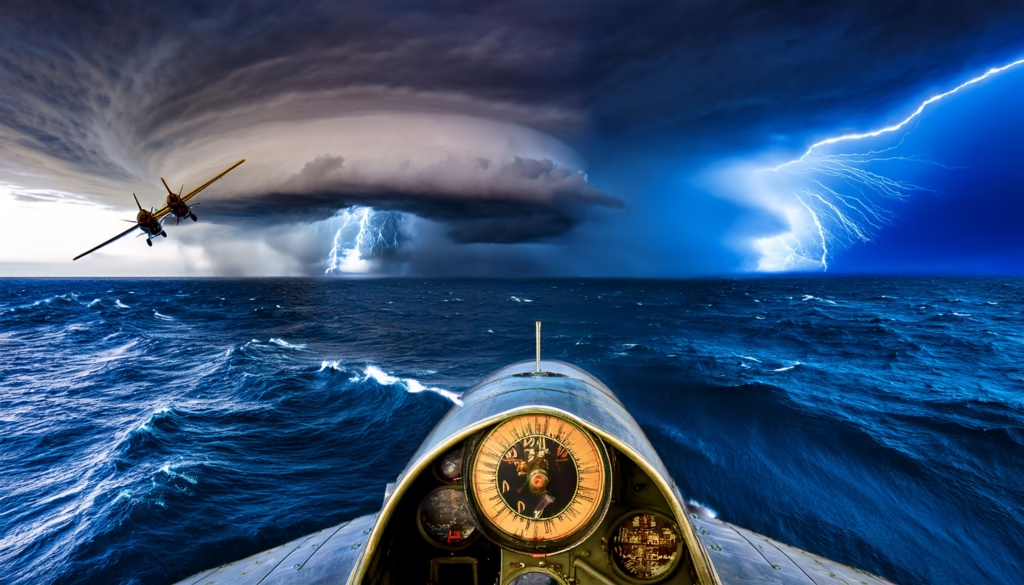

Why the Bermuda Triangle Isn’t Deadlier Than Other Oceans
One of the biggest myths about the Bermuda Triangle is its supposed supernatural danger. In reality, Bermuda Triangle disappearances debunked time and again reveal no elevated risk.
-
Traffic volume skews the stats: This Atlantic stretch is among the world’s busiest shipping lanes and air routes, handling massive cargo ships, cruise liners, and flights daily. More activity means more incidents—pure math, not mystery.
-
NOAA’s official stance: As early as 2010, NOAA declared, “There is no evidence that mysterious disappearances occur with any greater frequency in the Bermuda Triangle than in any other large, well-traveled area of the ocean.” Lloyd’s of London, which tracks maritime losses worldwide, echoes this: no premium hikes for Triangle routes.
-
Kruszelnicki’s probability math: “The number of ships and planes that go missing here is the same as anywhere else on a percentage basis,” he told The Independent. In a region seeing thousands of crossings yearly, a handful of losses feels ominous but aligns with ocean-wide norms.
This high-traffic reality creates a perception bias. People notice Triangle stories more because they’re sensationalized, ignoring similar events in the Pacific’s Devil’s Sea or the North Atlantic’s stormy patches.
Nature’s Hidden Dangers in the Bermuda Triangle
Forget sea monsters—the science behind Bermuda Triangle points to Earth’s raw power. The region’s geography and weather brew hazards that can overwhelm even seasoned mariners.
The Gulf Stream, a swift river within the ocean, races at 2-3 knots (up to 5 mph), carrying warm water northward. It destabilizes air above, spawning sudden squalls.
Key environmental threats include:
-
Rogue waves and hurricanes: Towering waves over 100 feet can emerge without warning, capsizing ships. The Atlantic hurricane season (June-November) hammers this zone, with storms like Hurricane Maria (2017) proving its volatility.
-
Waterspouts and shallow reefs: Twisting waterspouts—tornadoes over water—form rapidly. Nearby coral reefs and sandbars around the Bahamas snag hulls, especially in fog.
-
Magnetic variations: Shallow seabeds disrupt compasses, causing them to align with true north instead of magnetic north. Pilots and captains misread headings, veering off course.
These factors compound in “perfect storms,” where calm turns chaotic in minutes. Satellite data from NOAA confirms this isn’t unique but amplified here by location.
Human Error: The Overlooked Culprit in Famous Cases
Technology like GPS and radar has slashed risks, but the Bermuda Triangle facts highlight persistent human factors. Bad calls in foul weather spell doom.
-
Equipment glitches and poor prep: Pre-GPS eras relied on outdated charts; today, over-reliance on tech fails during blackouts.
-
Judgment lapses: Captains push through deteriorating forecasts, delaying turns. Slower rescue times in vast waters exacerbate losses.
-
Historical context: Mid-20th-century flights lacked black boxes; radio silence was common in storms.
NOAA sums it up: “The combined forces of nature and human fallibility outdo even the most incredulous science fiction.” Kruszelnicki notes popular accounts downplay errors, favoring drama.
Take Flight 19 (1945): Five US Navy bombers vanished on a routine Florida training run. Debriefs cite compass failure, disorientation in a squall, and fuel exhaustion. The rescue plane sent after them also crashed—likely from overload and flames. Weather logs confirm a massive front that day.
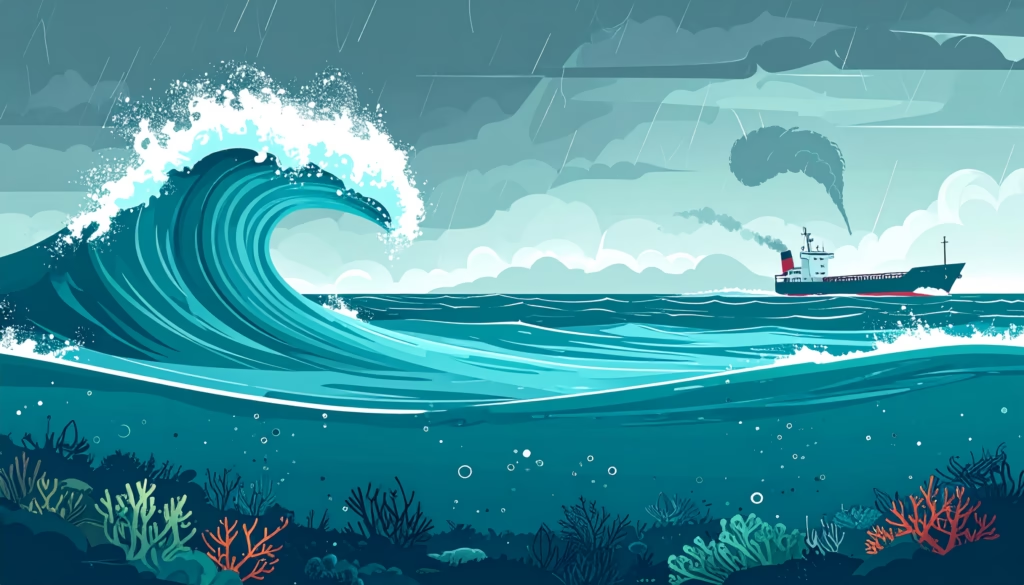
The Birth and Boom of the Bermuda Triangle Myth
The “Bermuda Triangle” label wasn’t scientific—it was marketing genius. Writer Vincent Gaddis coined it in a 1964 Argosy magazine article, linking scattered incidents. Fame exploded with Charles Berlitz’s 1974 bestseller The Bermuda Triangle, blending facts with Atlantis lore, UFOs, and electromagnetic “vortices.” It sold millions, spawning films like Close Encounters.
Critics slam Berlitz for cherry-picking: ignoring solved cases, inflating numbers, and ignoring weather reports. Larry Kusche’s 1975 book The Bermuda Triangle Mystery—Solved fact-checked it, showing many “vanishings” occurred outside the zone or had mundane resolutions.
Media fueled the fire—TV specials, podcasts, and TikToks recycle unverified tales. Why? Mystery sells. As Kruszelnicki puts it, “Aliens are sexier than statistics.”
Pilot Bruce Gernon’s Eerie Tale: Fact or Fiction?
One standout yarn is Bruce Gernon’s 1970 flight from Andros Island to Miami. He described a gray, tunnel-like cloud engulfing his Cessna, frying instruments, and “stealing” 30 minutes—arriving early with no explanation.
Paranormal fans hail it as proof of time warps. Skeptics, including Kruszelnicki, counter with science:
-
Elongated clouds (lenticular formations): High-altitude winds sculpt tunnel shapes, mimicking sci-fi portals.
-
Instrument interference: Electromagnetic bursts from lightning or St. Elmo’s fire scramble avionics.
-
Time dilation illusion: Stress, clouds blocking the sun, and wind shear distort perceived time.
Gernon later self-published his story, but no radar corroborates it. Experts like NOAA attribute it to a rare but natural “UFO cloud” phenomenon, common in stormy tropics.
Modern Evidence and Debunking Efforts
Since 2017, Kruszelnicki has toured with talks, podcasts (like Stuff They Don’t Want You to Know), and interviews, wielding data against dogma. US Coast Guard stats show incidents dropped 80% post-1970s due to better tech.
Compare global hotspots:
No outlier for the Triangle. Satellite monitoring and AI weather models now predict 90% of rogue events.
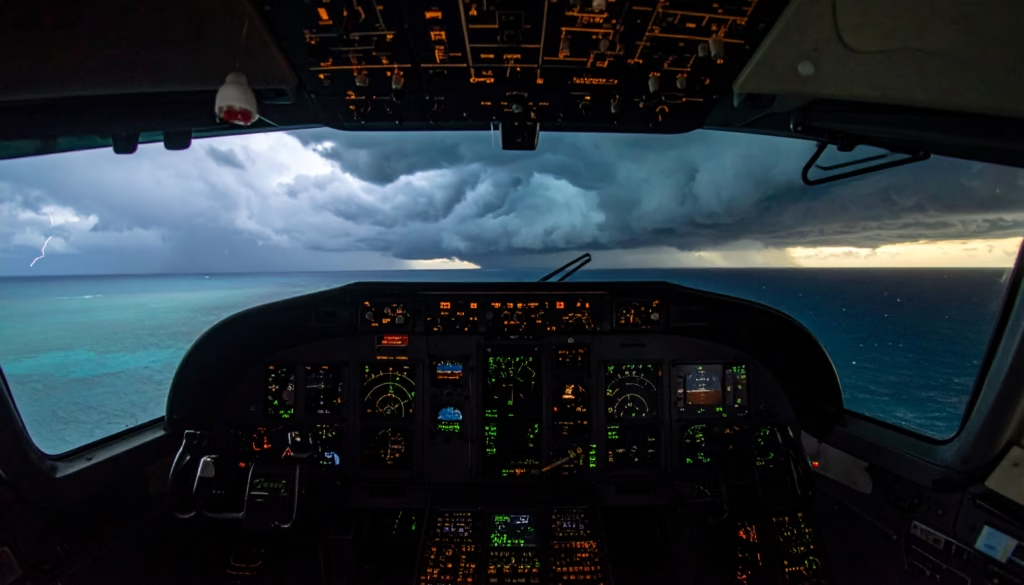
Why the Legend Endures—and Why Science Wins
Books, movies (The Triangle, 2005), and YouTube (millions of views on “Bermuda Triangle solved?”) keep Atlantis dreams alive. Social media amplifies unvetted claims, from “government cover-ups” to “Methane gas eruptions” (a fringe theory debunked by pressure math).
Yet evidence mounts: No UFO wreckage, no Atlantis ruins (sonar scans show normal seabeds). Probability dictates losses in busy waters; humans err under pressure.
Kruszelnicki urges skepticism: “Extraordinary claims need extraordinary evidence.” For sailors and pilots, respect the ocean—check forecasts, calibrate compasses, and file plans.
The Bermuda Triangle mystery explained isn’t thrilling, but it’s true. Next time you hear of a vanishing, ask: Weather? Error? Or just stats? Science cuts through the fog, proving our world is wondrous enough without aliens.
Visit BB daily for more articles