January Wolf Supermoon 2026: Witness the Year’s Biggest, Brightest Moon Before the Next Hiatus
Sky enthusiasts and stargazers worldwide are gearing up for an unforgettable celestial event: the January Wolf Supermoon 2026. Rising as the first full moon of the year on January 3, this “Wolf Moon” isn’t just any lunar display—it’s a rare supermoon, coinciding with the Moon’s closest orbit to Earth. This makes it the largest and most luminous full moon until November 2026, offering a spectacular kickoff to the new year.
What sets this event apart? After a string of supermoons from October 2025—including the Harvest Moon, Beaver Moon, and Cold Moon—this Wolf Supermoon caps off the sequence. If you’re in India, the eastern horizon after sunset on January 2-3 promises jaw-dropping views. Keep reading for the best time to see Wolf Supermoon in India, its historical roots, photography tips, and why it’s a must-see skywatching highlight.

Understanding the Supermoon Phenomenon
A supermoon happens when a full moon aligns perfectly with perigee—the Moon’s closest point to Earth in its elliptical orbit. During this phase, our natural satellite can appear up to 14% larger in diameter and 30% brighter than at apogee, its farthest point, often called a micromoon.
NASA clarifies that “supermoon” isn’t a strict scientific label but a popular term for when the Moon ventures within 90% of its minimum Earth distance (about 356,500 km). For the 2026 Wolf Supermoon, expect a diameter around 400,000 km closer than average, amplifying its glow against the winter sky.
This proximity enhances tidal forces slightly and creates stunning visual effects, like the “moon illusion” near the horizon. Fun fact: Supermoons occur 3-4 times yearly on average, but gaps like the one until late 2026 make this one extra special for astronomers and casual observers alike.
The Fascinating Origin of the ‘Wolf Moon’ Name
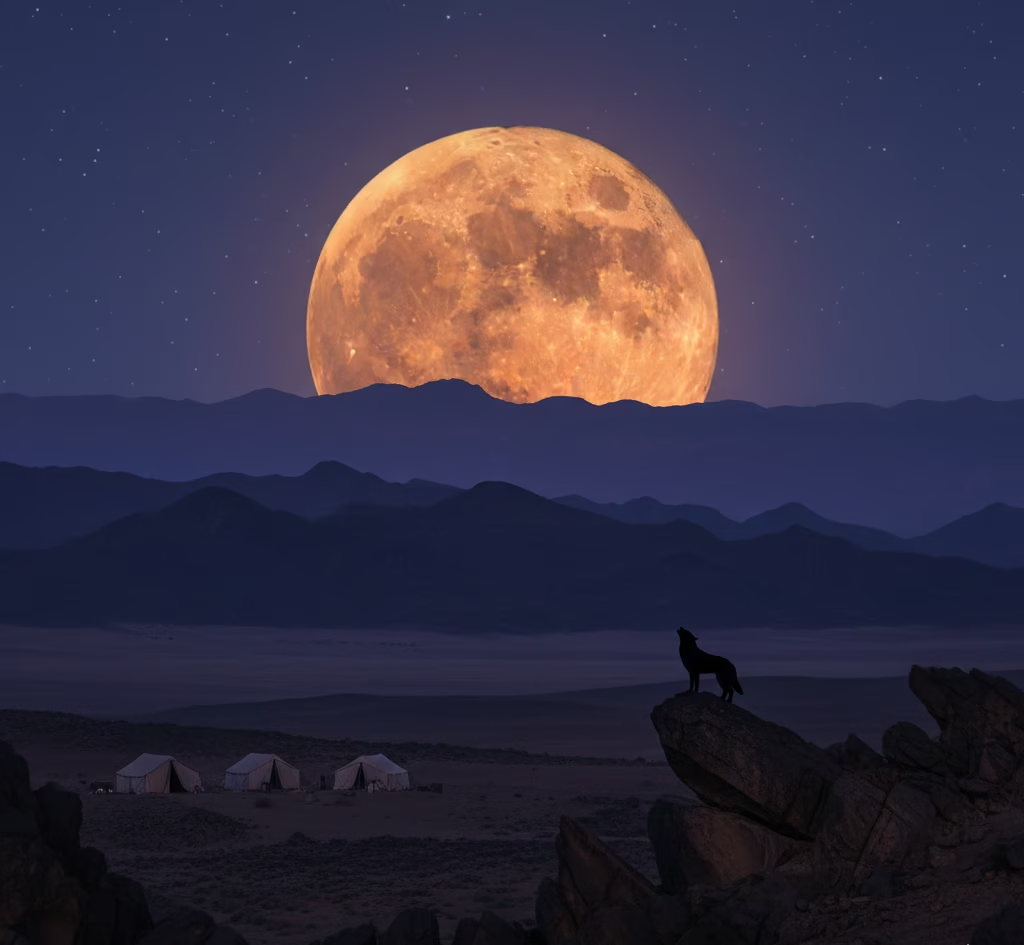
Ever wondered about the Wolf Moon meaning? The name traces back to Indigenous North American tribes, particularly Algonquian peoples, who tracked lunar cycles with nature-inspired monikers. January’s full moon, dubbed the Wolf Moon, evoked the haunting howls of hungry wolf packs echoing through frozen forests during the depths of winter.
European settlers adopted similar traditions, linking it to the “Old Farmer’s Almanac,” which popularized these names. Wolves, scavenging scarce prey under snow-covered grounds, symbolized survival amid hardship. Other cultures had their twists: Colonial Americans called it the “Snow Moon” for heavy January blizzards, while Chinese lore names it the “Holiday Moon,” tying into New Year festivities.
This rich folklore adds emotional depth to the event, turning a scientific spectacle into a cultural touchstone. In 2026, as the Wolf Supermoon illuminates the night, it invites reflection on humanity’s ancient bond with the cosmos.
Exact Timing and Peak Viewing Guide
Precision matters for skywatching. The January Wolf Supermoon 2026 hits peak illumination at 10:03 GMT on January 3. That’s 3:33 PM IST in India—still daylight for most—so the real magic unfolds post-sunset.
-
India (IST): Moonrise around 6:00-7:00 PM on January 2 and 3. It climbs high by midnight, staying visible all night.
-
USA (EST): Peaks at 5:03 AM January 3; best views at dusk January 2.
-
UK (GMT): Exact peak; horizon rise ~5:00 PM January 2.
-
Australia (AEDT): Evening of January 4 for prime time.
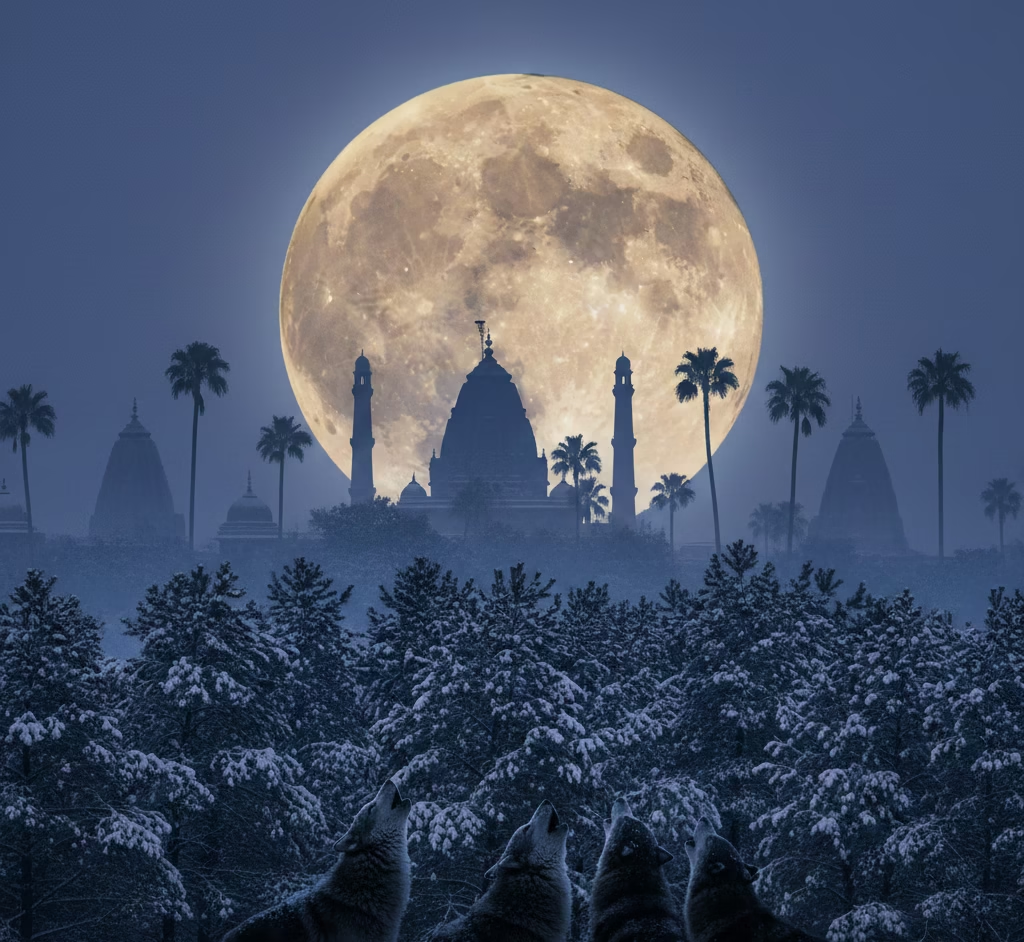
Globally, the Moon’s low eastern rise creates the illusion of enormity, especially with foreground objects like trees or buildings for scale. Weather apps predict clear skies in parts of India—check local forecasts for your city, from Kolkata to Mumbai.

Best Places and Tips for Seeing the Wolf Supermoon in India
India’s diverse landscapes make it prime for supermoon viewing tips. Urban light pollution dims the show, so head to darker spots:
-
Rural fields or hills: Places like the Western Ghats, Himalayan foothills, or Rajasthan deserts offer unobstructed horizons.
-
Beaches and rooftops: Goa beaches or high Kolkata terraces work well; avoid coastal haze.
-
National parks: Jim Corbett or Sundarbans for immersive nature vibes (with permits).
Pro tips:
-
Arrive 30 minutes before moonrise for the golden hue.
-
Use apps like Stellarium or SkySafari for real-time tracking.
-
Binoculars or a telephoto lens amplify details like craters.
-
Dress warm—January nights dip low, even in southern India.
Clear skies aren’t guaranteed; clouds over North India might play spoiler, but southern regions look promising.
Capturing the Wolf Supermoon: Photography Essentials
Turn your phone or camera into a lunar powerhouse with these Wolf Supermoon photography tips:
-
Gear setup: Wide-angle lens (14-24mm) for landscapes; telephoto (200mm+) for close-ups. Tripod is non-negotiable for sharp shots.
-
Settings: ISO 100-400, f/8 aperture, 1/125s shutter. Manual focus on infinity.
-
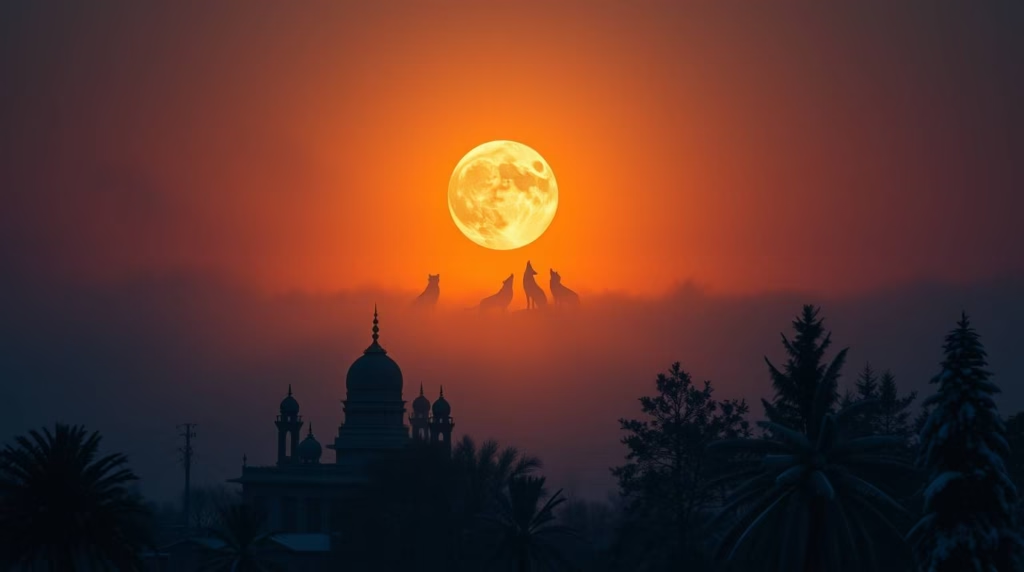
Composition: Frame with silhouettes—temples, minarets, or palms—for cultural flair in Indian shots.
-
Apps: Lightroom for edits; NightCap for smartphones.
Posts using the hashtag #WolfSupermoon2026 will go viral on social media; follow the trend and tag your amazing photos.

Why This Supermoon Matters: Science, Culture, and Beyond
Beyond beauty, the Wolf Supermoon influences tides, animal behavior, and even human moods (per some studies on lunar sleep cycles). It’s a reminder of Earth’s dynamic place in the solar system, with the Moon receding 3.8 cm yearly.
Historically, full moons guided hunters, farmers, and navigators. In modern India, it blends with festivals like Lohri (January 13), amplifying spiritual significance.
Don’t miss this—after 2026’s gap, the next supermoon series ramps up later. Share your views online and connect with the global skywatching community.
Mark your calendar: The January Wolf Supermoon 2026 is your chance to greet the year with cosmic wonder. Clear skies!
for more news visit BB