Which location is referred to as India’s Finland? Discover Why Kerala Deserves This Title
India is a country celebrated for its breathtaking diversity — from snow-capped mountains and ancient temples to lush rainforests and tranquil beaches. Every region has a distinctive charm and cultural richness that attracts travelers from all over the world. Among such jewels of India lies a state known for its pristine natural beauty, literacy, progressive society, and peaceful lifestyle — Kerala, often called the Finland of India.
But why does Kerala share this fascinating nickname? What makes it comparable to the Nordic nation famous for its lakes, high quality of life, and education system? Let’s take a deep dive into what makes Kerala India’s answer to Finland — not just for its scenic beauty but also for its social development, governance, and human-centered progress.
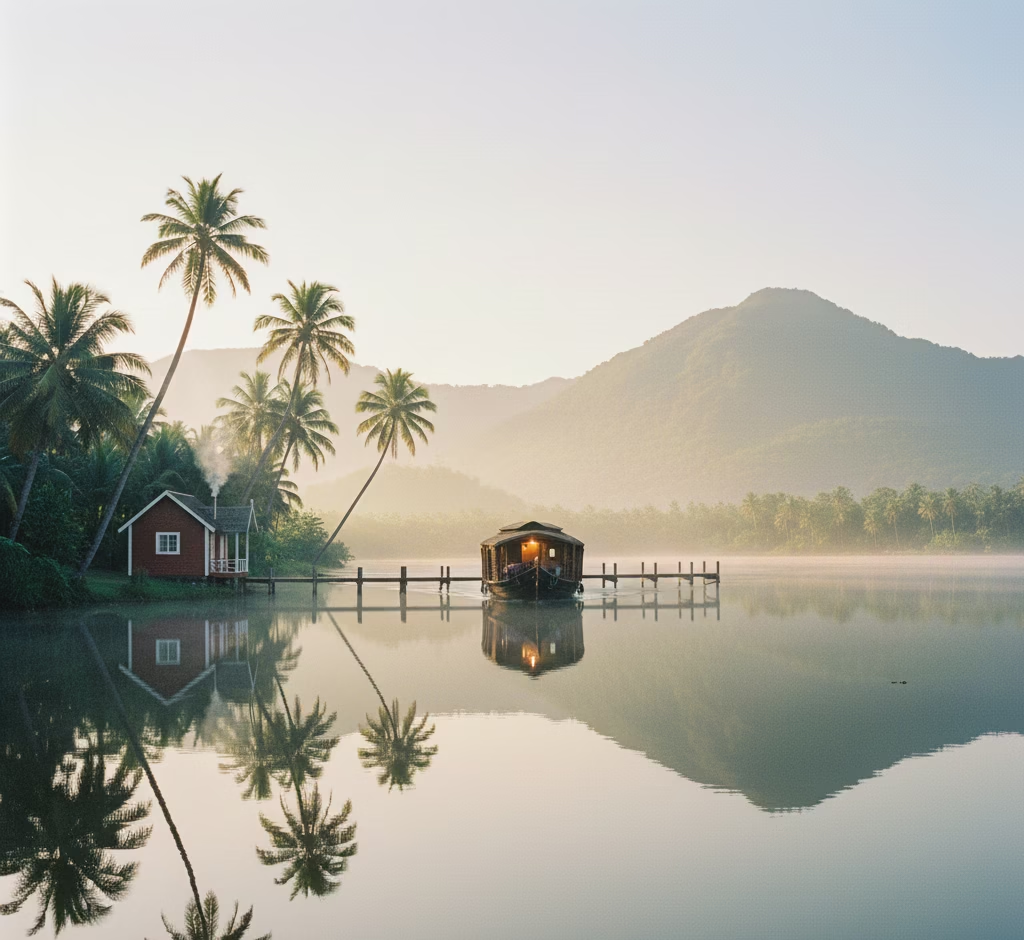
Where Is the “Finland of India” Located?
The state of Kerala, located on the south-western coast of India along the Arabian Sea, holds the honorary title of “Finland of India.” With its idyllic backwaters, palm-fringed beaches, lush hills of the Western Ghats, and rich cultural heritage, Kerala stands out as one of India’s most advanced and serene destinations.
However, Kerala earns this designation not solely for its scenic resemblance to Finland but more so for its educational excellence, gender equality, welfare-driven policies, and high human development index (HDI) — all traits it shares with the Nordic country.
Why Kerala Is Known as the Finland of India
The comparison between Kerala and Finland extends far beyond surface-level similarities. The nickname primarily stems from the Finland–India Education Partnership, but it represents something larger: a shared philosophy centered on inclusive growth, education, and citizen welfare.
Let’s break down the key similarities that have given Kerala this distinctive title.
1. A Strong Education-First Philosophy
Finland has long been recognized as a global leader in education, earning high rankings in international assessments such as PISA (Programme for International Student Assessment). Education in Finland emphasizes creativity, holistic learning, and skill-based approaches rather than rote memorization.
Similarly, Kerala stands as India’s most literate state, with a literacy rate exceeding 94%. In 1991, it was officially declared India’s first fully literate state, a distinction it proudly maintains.
The government of Kerala has always prioritized quality education and teacher training, integrating modern, student-friendly teaching methods. In 2022, Kerala announced a formal collaboration with Finland to incorporate key elements of Finnish pedagogy into its school system — such as learning through play, early childhood education reforms, and curriculum decentralization.
Just like Finland, Kerala treats education as a fundamental right rather than a privilege, ensuring even children from remote or economically weaker backgrounds receive equal opportunities to learn.
2. High Human Development and Quality of Life
When it comes to human welfare, Kerala ranks among the most advanced regions in India. Despite having a modest GDP compared to industrial states, the state boasts one of the highest Human Development Index (HDI) scores in the country (approximately 0.782). This achievement highlights Kerala’s balanced approach — prioritizing health, literacy, equality, and life expectancy over pure economic growth.
This approach mirrors the Nordic model followed by Finland, where government policies aim to reduce inequality and strengthen the social safety net. Both regions ensure accessible healthcare, free education, clean environments, and community-driven welfare systems.
Kerala also has India’s highest life expectancy (around 77 years) and lowest infant mortality rates, both indicators of its robust healthcare infrastructure and focus on preventive medicine. These outcomes closely align with Finland’s social standards and public health performance, which are among the best globally.
3. Geographical and Environmental Parallels
Both Finland and Kerala are celebrated for their deep connection to nature and water. Finland is globally known as the “Land of a Thousand Lakes,” while Kerala’s identity is woven around its stunning backwaters — a 900-km network of lagoons, canals, and rivers that reflect the serene pace of life.
These natural ecosystems not only define the scenic beauty of both places but also play a central role in their cultures and economies. Just as the Finnish people respect the purity of nature, Keralites practice an eco-conscious lifestyle rooted in harmony with the environment.
Kerala’s Western Ghats, a UNESCO World Heritage site, is one of the world’s eight biodiversity hotspots. The region’s lush forests, rolling hills, and diverse flora and fauna make it a haven for nature lovers, much like Finland’s green landscapes.
This shared environmental consciousness manifests in community practices like sustainable fishing, organic farming, and responsible tourism, promoting coexistence rather than exploitation.
4. Gender Equality and Social Empowerment
Gender equality forms another bridge between Finland and Kerala. Finland has consistently ranked as one of the most gender-equal nations globally, and Kerala proudly reflects similar values within the Indian context.
According to the most recent census data, the female population in Kerala surpasses the male population, with a ratio of 1,084 females per 1,000 males — the highest in India. This reflects a society where women receive better healthcare, education, and social representation compared to other regions.
Kerala’s success in women’s empowerment can be attributed to educational access, grassroots movements, and community-based programs like Kudumbashree, which supports women’s entrepreneurship and microfinance. This women-led initiative has transformed the state’s rural economy and social structure, echoing Finland’s emphasis on gender parity in public and professional life.
5. Decentralized and Participatory Governance
One of Kerala’s most remarkable achievements is its robust decentralized governance model, which closely mirrors Finland’s municipal structure.
In 1996, Kerala introduced the People’s Plan Campaign, transferring about 35–40% of the state budget directly to local self-governing bodies (Panchayats). This bold reform empowered citizens at the grassroots level to decide budget priorities and development plans based on local needs.
Similarly, Finland operates with a highly autonomous municipal government system, enabling localized decision-making. This shared commitment to participatory democracy ensures transparency, accountability, and equitable distribution of resources in both societies.
In both Kerala and Finland, governance is not a top-down administration but a partnership between the state and its people, leading to stronger trust and civic engagement.
6. Heritage of Health and Wellness
Kerala’s approach to healthcare is deeply intertwined with its cultural and natural heritage. The state remains one of the few in India where Ayurveda continues to thrive as a mainstream medical system. Across Kerala, you’ll find centuries-old institutions and wellness retreats practicing this ancient science of holistic healing.
The synergy between traditional knowledge and modern healthcare has made Kerala a model for preventive and sustainable living, paralleling Finland’s emphasis on mental well-being, healthy lifestyles, and stress-free environments.
Both regions see good health as more than the absence of disease — it’s about maintaining physical, emotional, and social balance.
7. Literacy, Learning, and Legacy
Kerala’s literacy success story didn’t happen overnight. It is the result of decades of community-driven initiatives, social awareness campaigns, and political will. From missionary schools established during colonial times to modern-day e-learning initiatives, the state’s dedication to knowledge sharing continues to strengthen its foundation.
The state capital, Thiruvananthapuram, houses institutions of international repute such as the Indian Institute of Space Science and Technology (IIST) and Technopark, while smaller towns boast some of India’s best public schools.
This culture of lifelong learning reflects Finland’s equally rigorous focus on teacher training, where educators are seen as nation builders. In both societies, teachers enjoy prestige, autonomy, and the resources to innovate in classrooms.
8. Natural Wonders That Rival Nordic Beauty
While Kerala’s comparison to Finland goes beyond aesthetics, its landscapes deserve special mention. The state’s natural charm draws more than 16 million visitors annually, both domestic and international.
Some of the most picturesque spots include:
-
Alleppey and Kumarakom – famous for their Venice-like backwaters, luxury houseboats, and palm-lined canals.
-
Munnar – lush tea gardens, waterfalls, and misty hills reminiscent of European countryside.
-
Wayanad – reflects Finland’s serene woodland appeal with its lush forests, caverns, and wildlife sanctuaries.
-
Varkala and Kovalam – serene beaches with stunning sunsets over the Arabian Sea.
-
Athirappilly Waterfalls – often called “India’s Niagara Falls,” these breathtaking cascades flow through thick rainforests.
Much like Finland’s lakeside towns, each destination in Kerala carries its own rhythm — peaceful, scenic, and rooted in sustainability.
9. Kerala’s Cultural Essence: Harmony in Diversity
Kerala’s people embody inclusivity, compassion, and coexistence. The state has long been a melting pot of faiths, where Hindus, Muslims, Christians, and Jains coexist peacefully, celebrating shared festivals and traditions.
The Cheraman Juma Mosque in Kodungallur, built in 629 AD, is the oldest mosque in India, symbolizing centuries of cultural harmony. Similarly, ancient temples like Sabarimala and churches like St. Francis in Kochi stand as testaments to Kerala’s multi-religious tolerance.
This harmonious coexistence parallels Finland’s humanitarian values and egalitarian outlook, where society thrives on unity and shared well-being rather than division.
10. A Haven for Sustainable Tourism
Kerala has emerged as a global model for responsible tourism, earning multiple international awards for its eco-friendly practices. Initiatives under the Responsible Tourism Mission promote community employment, local art, and organic farming while minimizing environmental impact.
This mirrors Finland’s green tourism philosophy, where travelers are encouraged to connect with nature responsibly. Whether it’s exploring Kerala’s backwaters on solar-powered boats or staying in eco-lodges surrounded by spice plantations, tourism here aligns with the principles of sustainability and harmony.
11. Fun and Lesser-Known Facts About Kerala
-
The word ‘Kerala’ originates from ‘Kera’, meaning coconut — earning it the name “Land of Coconuts.”
-
Kerala consumes nearly 20% of India’s gold each year.
-
The village of Kodinhi is world-famous for having over 400 pairs of twins.
-
Kerala was India’s first Baby-Friendly State, recognized by UNICEF and WHO for outstanding child healthcare.
-
It’s also the first Indian state to receive monsoon rains each year, usually in early June.
-
Kerala is home to Kalaripayattu, one of the world’s oldest martial arts forms.
-
The state hosts over 500 bird species, including the majestic Great Indian Hornbill.
-
Kerala is consistently ranked among India’s cleanest states.
12. The Essence of the Kerala-Finland Connection
Both Kerala and Finland demonstrate that real progress is not measured by skyscrapers or industrial output but by human happiness, equality, and education.
Their paths—though geographically distant—align in their shared belief that an informed, healthy, and empowered population forms the backbone of a truly developed society.
Kerala’s nickname, “The Finland of India,” thus stands as a tribute not just to its beauty but to its progressive spirit — a beacon for what every state or nation can aspire to achieve.
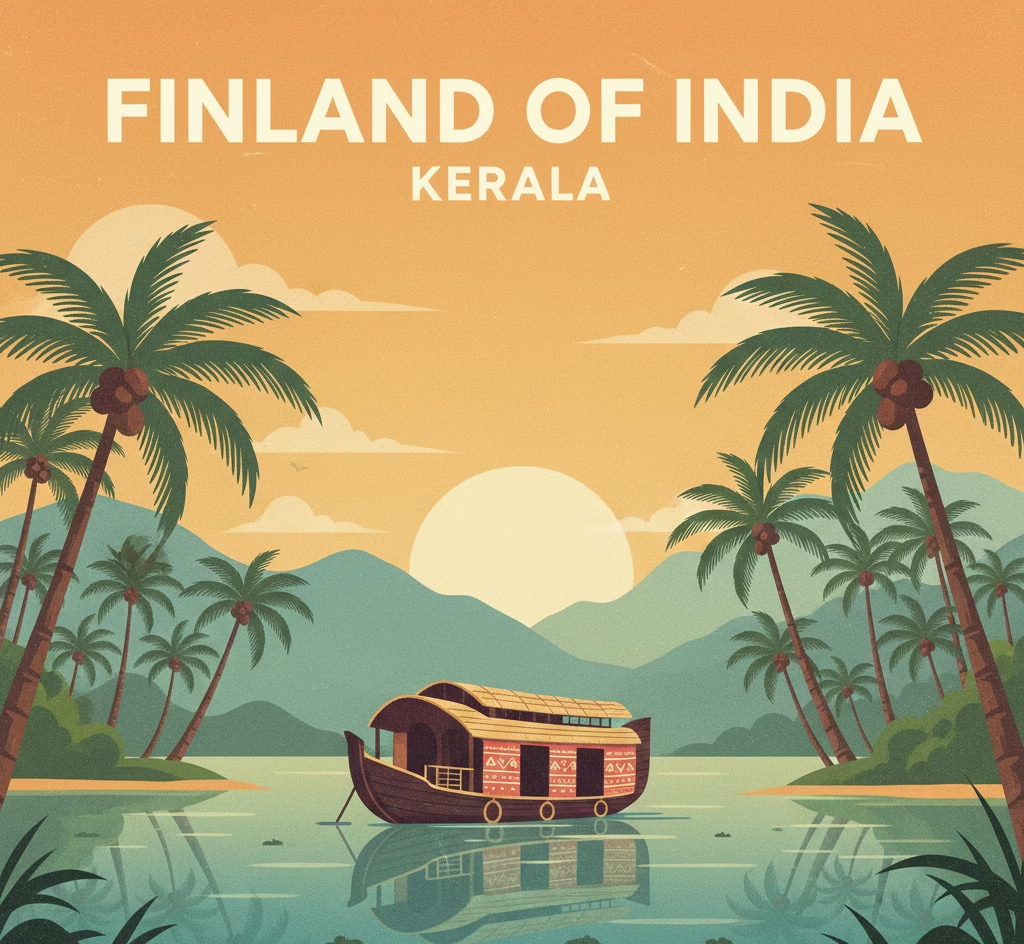
Planning Your Visit to Kerala: Tips for Travelers
If you’re inspired to visit the Finland of India, here are some travel tips:
-
Best Time to Visit: October to March for pleasant weather and clear skies.
-
Getting There: Major airports in Kochi, Thiruvananthapuram, and Kozhikode offer excellent connectivity.
-
Top Experiences: Houseboat cruises on Alleppey backwaters, elephant sanctuaries in Thrissur, Ayurvedic retreats, hill station treks, and local cuisine tours.
-
Must-Try Dishes: Kerala Sadya, Puttu and Kadala curry, Karimeen Pollichathu, and banana chips.
-
Unique Souvenirs: Coir craft, spices, handloom clothing, and traditional Aranmula mirrors.
Traveling through Kerala feels like stepping into a green paradise where modern life coexists beautifully with heritage and nature.
Conclusion
So, which place is known as the Finland of India? The answer is clearly Kerala — a state that mirrors Finland not just in its lush, water-rich landscapes but in its commitment to education, equality, sustainability, and happiness.
Kerala proves that development grounded in people’s welfare can create a society as progressive and peaceful as any in the world. Whether you seek wisdom, wellness, or wanderlust, the “Finland of India” welcomes you with open arms, coconut palms swaying gently in the breeze, and a quiet reminder that true beauty lies in balance — between humanity and nature.
visit bulletinbuzzs for latest updates