Lonar Crater Lake: Maharashtra’s Meteor-Made Marvel and Hidden Gem
Deep in the heart of Maharashtra’s Buldhana district lies an extraordinary wonder that defies everyday landscapes: Lonar Crater Lake. Formed by a colossal meteorite impact around 50,000 years ago, this site blends cosmic drama with earthly beauty. Far from crowded tourist trails, Lonar Lake captivates adventurers, scientists, and nature lovers with its surreal colors, ancient temples, and thriving ecosystem. If you’re searching for unique Maharashtra travel spots or meteor crater destinations in India, Lonar Crater Lake demands a spot on your itinerary. Discover why this basaltic basin remains one of India’s most enigmatic natural phenomena.

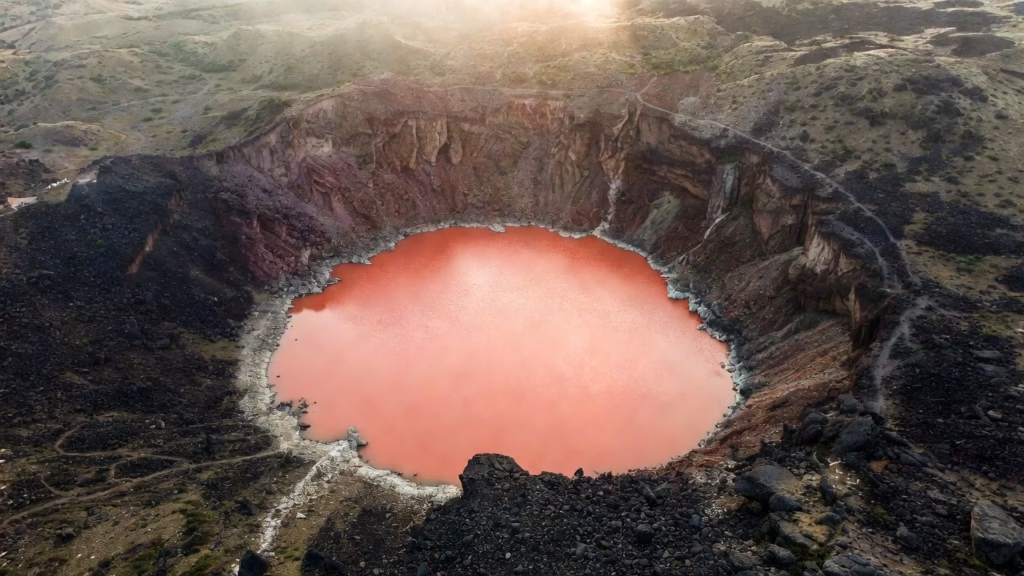
The Cosmic Birth of Lonar Crater Lake
Imagine a fiery meteorite hurtling through space, crashing into Earth’s surface with unimaginable force. That’s the story behind Lonar Crater Lake, a hypervelocity impact crater etched into the Deccan Traps’ ancient basalt rock formations. Dating back approximately 50,000 years—confirmed through radiometric dating and geological surveys—this 1.8-kilometer-wide depression is the world’s only known crater of its kind formed entirely in basaltic rock.
What sets Lonar Lake apart? Unlike common freshwater bodies, it harbors a hyperalkaline, saline lake with a pH level soaring above 9.5. The impact ejected massive basalt boulders, some weighing tons, scattering them across the rim. Today, rainwater and underground springs fill the 150-meter-deep basin, creating a layered ecosystem: an oxygen-rich upper zone teeming with life and a toxic, anoxic bottom layer where only the hardiest microbes endure. This unique chemistry draws global attention, positioning Lonar as a prime site for studying extraterrestrial impacts akin to those on Mars or the Moon.
Geologists from institutions like the Geological Survey of India (GSI) have mapped its structure, revealing shocked quartz minerals—irrefutable proof of the meteor’s explosive arrival. For travelers, the crater’s near-perfect circularity offers a visual spectacle, a scar from prehistory that whispers secrets of our planet’s violent past.
Why Lonar Lake’s Colors Mesmerize Visitors
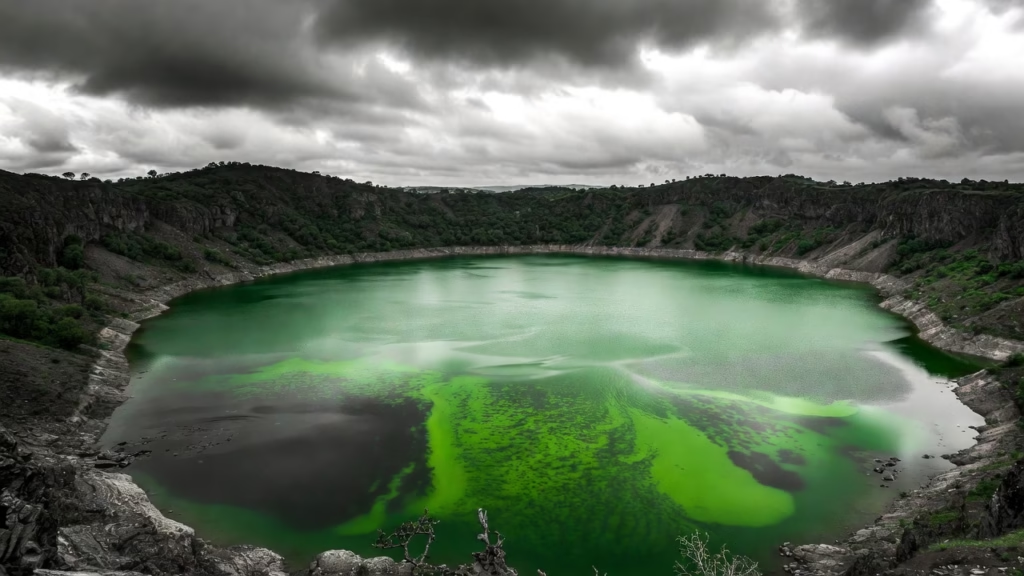
One glance at Lonar Crater Lake reveals its chameleon-like allure. The water shifts hues dramatically—vibrant green in the monsoons, rosy pink during dry spells, and blood-red at times—thanks to halophilic archaea and bacteria flourishing in its briny depths. These extremophiles, adapted to extreme salinity and alkalinity, produce pigments like bacteriorhodopsin that tint the lake, especially when algae blooms peak.
Seasonal changes amplify this magic. Post-monsoon, the lake glows emerald from phytoplankton; in winter, pink dominates as salt concentrations rise. Divers and researchers note the stratification: the top 4-5 meters support fish and invertebrates, while below lies a “dead zone” richer in unique microbes than Earth’s ocean floors. NASA’s astrobiologists study these organisms, hypothesizing parallels to alien life in acidic Martian lakes or Europa’s subsurface oceans.
For photographers chasing Lonar Lake colors, the rim trail provides endless vantage points. Monsoon rains swell the lake, intensifying greens; winter clarity sharpens pinks against the black basalt. This ever-changing palette, paired with the crater’s isolation, creates an otherworldly vibe that’s perfect for Instagram-worthy shots or quiet contemplation.
Lonar Crater: A Global Scientific Hotspot
Lonar Crater Lake, known as a “living laboratory,” draws experts from all over the world. Indian researchers from the Nehru Science Centre and international teams from NASA and the European Space Agency have conducted expeditions here, analyzing impact dynamics, microbial diversity, and even potential pharmaceutical compounds from extremophiles. Studies published in journals like Nature Geoscience highlight how the crater simulates ancient volcanic events, aiding models of Earth’s early bombardment era.
Ecologically, the site’s biodiversity shines. Declared a Lonar Crater Wildlife Sanctuary in 2010 by the Maharashtra government, it spans 69 square kilometers, safeguarding flamingos, peafowl, and over 100 bird species alongside leopards, sloth bears, and chinkaras. The rim’s scrub forests host rare flora like Caralluma losirianum, while insects thrive in microhabitats. Conservation efforts focus on curbing pollution and invasive species, ensuring this Maharashtra meteor crater remains pristine.
Visitors can join guided eco-tours or witness ongoing research, blending education with adventure. It’s not just science—it’s a window into life’s resilience.
Must-Visit Attractions Around Lonar Lake
Lonar Crater Lake isn’t a solo act; its surroundings weave history, spirituality, and nature into a tapestry. Start with the Daitya Sudan Temple, a 13th-century marvel dedicated to Lord Vishnu’s Varaha avatar. Carved from ejecta basalt stones, its intricate carvings depict cosmic battles, symbolizing the demon king crushed by the meteor-like boar incarnation. Legends claim the impact created the lake to slay a demon, blending myth with geology.
Nearby, the Gomukh Temple perches by a perennial freshwater spring, its waters cascading into the saline lake—a poetic clash of sweet and salt. Other gems include the Kamal Temple ruins and Sita Kund, a stepped pool for ritual baths. Hike the 6-km rim trail for panoramic views: wildflowers in spring, migratory birds in winter, and starlit skies revealing the Milky Way.
For adventure seekers, kayaking (with permits) offers lake-level thrills, while birdwatching hides spot rarities like the Indian roller. These sites elevate Lonar Lake from natural wonder to cultural pilgrimage.
Best Time to Visit Lonar Crater Lake for Peak Experience
Timing unlocks Lonar Crater Lake’s full splendor. October to February reigns supreme: mild temperatures (15-28°C) make rim hikes pleasant, and post-monsoon colors dazzle in crisp light. Wildlife peaks with bird migrations, and festivals like the Lonar Utsav add cultural flair.
March-May brings intense heat (up to 42°C), fading lake vibrancy and deterring exploration. Monsoons (June-September) transform the crater into a misty paradise but risk slippery trails and leeches—ideal for solitude seekers only. Pro tip: Weekdays avoid crowds; pack water, hats, and repellents year-round.
How to Reach Lonar Crater Lake Easily
Accessible yet remote, Lonar Crater Lake lies 500 km from Mumbai, 160 km from Aurangabad, and 120 km from Jalna. Fly into Aurangabad’s Chikmagalur Airport (IXA), then drive 3-4 hours via NH752H—scenic but with occasional potholes.
By train: Jalna Junction (20 km away) connects via Mumbai-Hyderabad lines; taxis (₹800-1200) or buses cover the rest. By road: State buses from Aurangabad or Mumbai; self-drive on NH53 for flexibility. There isn’t a direct train to Lonar, although Meerkhanpet has modest accommodations; for comfort, reserve eco-resorts like Gutala Lake Resort.
Travel tips: Rent a sturdy SUV for the 9-km gravel approach road. Nearest ATM and fuel in Lonar town; carry cash. Entry is free, but temple donations appreciated.
Why Lonar Crater Lake Tops Maharashtra’s Offbeat Destinations
In a state famed for Ajanta caves and beaches, Lonar Crater Lake stands unparalleled—a testament to cosmic forces shaping India. Its blend of science, spirituality, and serenity appeals to solo trekkers, families, and eco-tourists. Sustainable tourism thrives here: follow “leave no trace” principles, support local guides, and respect sanctuary rules.
Planning a trip? Combine with Aurangabad’s Ellora Caves for a 3-day loop. Whether chasing Lonar Lake pink waters, temple lore, or meteor mysteries, this Maharashtra meteor crater promises memories etched like its ancient scar.
Ready to explore? Share your Lonar Crater Lake travel plans!
for more news || visit Bulletinbuzzs