Madurai: The Eternal “Athens of India” – A City of Culture, Temples, and Timeless Heritage
Madurai, one of the oldest and most illustrious cities in Tamil Nadu, is often celebrated as the “Athens of India.” This poetic comparison is not a mere metaphor — it reflects the city’s deep-rooted history, architectural grandeur, cultural brilliance, and intellectual legacy. Like Athens, which stands as the cradle of Western civilization, Madurai has served as a beacon of learning, art, philosophy, and spirituality for South India for over two millennia. Its streets, temples, and festivals still echo the glory of ancient dynasties, especially the Pandya kings who once ruled this vibrant land.
Origins of the Epithet “Athens of India”
The moniker “Athens of India” arises from two compelling parallels. First, both Madurai and Athens are among the world’s oldest continuously inhabited cities. Archaeological evidence and literary records trace Madurai’s existence back more than 2,500 years, with references found in ancient Tamil Sangam literature. The city’s continuity through millennia makes it a living museum of human civilization — much like Athens, which evolved through the Classical, Hellenistic, Roman, and Byzantine periods.
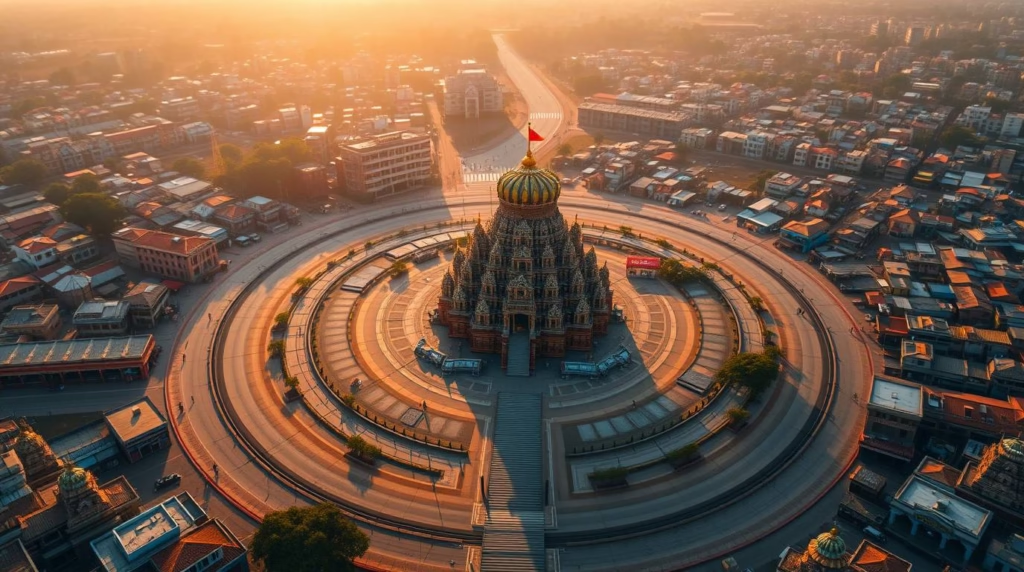
Second, both cities share similar urban and architectural planning principles. Just as Athens is known for the Parthenon, Madurai’s spiritual and physical heart is defined by the magnificent Meenakshi Amman Temple. The city spreads out around this sacred shrine in concentric squares, with streets radiating outward like lotus petals. This unique layout was deliberate — symbolizing cosmic harmony and sacred geometry, an idea central to both Greek and Dravidian thought.
A Glimpse into Madurai’s Glorious Past
Madurai’s historical grandeur began long before modern India took shape. The city served as the capital of the Pandya dynasty, one of the oldest Tamil South Indian kingdoms. According to legend, the very site of Madurai was blessed by Lord Shiva himself when drops of divine nectar fell upon it — hence the name “Madhura,” meaning sweetness. Ancient Tamil literature and foreign travelers’ accounts paint Madurai as a thriving trade and cultural hub, rich in wealth and wisdom.
Greek ambassador Megasthenes and Roman traders recorded their visits to this southern gem, marveling at its wealth, textiles, and pearls. This international connection further justifies its comparison to Athens, a city that too thrived on commerce, art, and philosophy. The Pandya era saw the rise of the great Tamil Sangams — assemblies of poets, scholars, and philosophers who refined Tamil grammar, poetry, and culture. Much like Athens’ philosophers Socrates and Aristotle, Madurai’s Sangam scholars shaped ethical thought and linguistic beauty that still define Tamil identity today.
The Meenakshi Amman Temple – The Center of Madurai
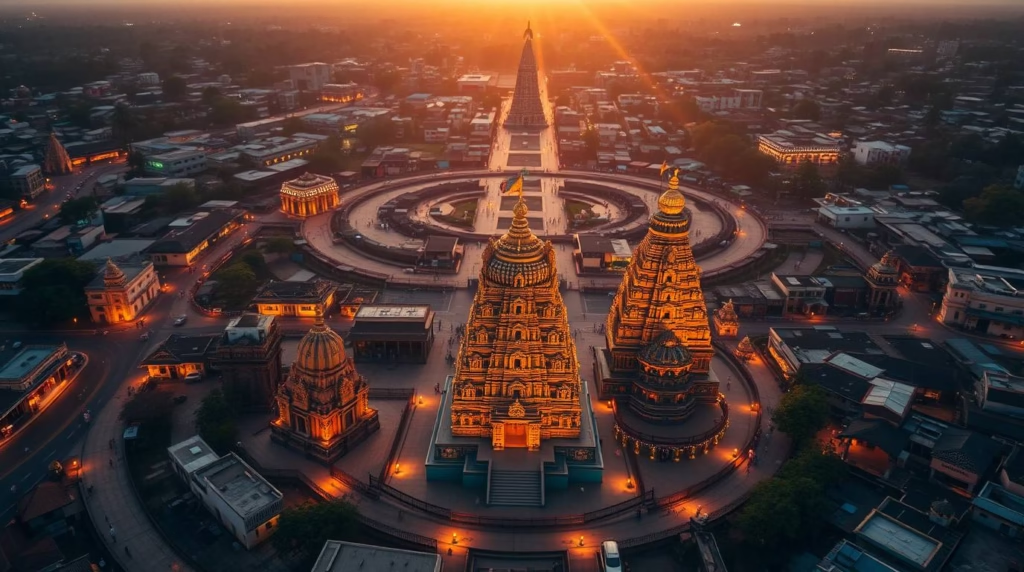
At the center of Madurai stands the Meenakshi Amman Temple, one of India’s most spectacular architectural marvels. Dedicated to Goddess Meenakshi (an avatar of Parvati) and her consort Lord Sundareswarar (Shiva), this temple is not merely a place of worship but a vibrant complex of art, sculpture, and symbolism. Its gopurams (towering gateways) soar into the sky, covered in thousands of brightly painted sculptures of gods, goddesses, demons, and animals — each telling a story from ancient mythologies.
The temple’s symmetrical layout, elaborate corridors, and sacred tanks represent cosmic order and divine balance. The architecture follows the principles of Vastu Shastra, similar to Athens’ adherence to proportion and harmony in Greek architecture. Both cities built temples not just as religious sites but as embodiments of aesthetic perfection and philosophical ideals.
Urban Planning and Symbolism – Echoes of Sacred Geometry
Madurai’s city design reflects the ancient Tamil concept of urban planning known as Mandala — sacred circles of cosmic significance. Streets are organized around the temple in square patterns that represent layers of spiritual progression. The outermost areas symbolize the mundane world, while inner layers lead devotees closer to the divine center. This planning mirrors Athens’ Acropolis and Agora, where architecture blended utility, spirituality, and philosophy into a seamless urban experience.
This geometric precision demonstrates early Tamil engineers’ mastery over form, symmetry, and purpose. Even in modern times, this organization continues to influence the city’s flow and cultural rhythm. Festivals, processions, and rituals are choreographed around these avenues, syncing human life with divine design — an idea deeply rooted in both Indian spirituality and Greek cosmology.
The Cultural Continuum – Madurai as the Soul of Tamil Nadu
Madurai’s enduring legacy lies not only in its structures but also in its people and traditions. Known as the cultural soul of Tamil Nadu, the city reverberates with classical music, Bharatanatyam dance, and ancient Tamil poetry. Its markets bustle with luminous silk sarees, spicy street food, and temple garlands, encapsulating a fusion of sacred devotion and everyday life.
Festivals like the Chithirai Thiruvizha, celebrating the divine wedding of Meenakshi and Sundareswarar, transform the entire city into a stage of devotion. Drawing millions of devotees, it reflects the same public spirit and civic pride seen in Athens during the Panathenaic festival, which honored the goddess Athena. This coexistence of faith, festivity, and art defines Madurai’s soul — a living continuity of traditions spanning thousands of years.
Centers of Learning and Scholarship
Madurai’s comparison to Athens extends beyond architecture into the realm of knowledge and scholarship. During the Sangam period, Madurai became a seat of Tamil literary and philosophical excellence. The Sangam academies, patronized by Pandya kings, gathered the era’s most brilliant minds — poets, thinkers, and linguists. Works like the Thirukkural and Ettuthokai embody human values, ethical philosophy, and poetic mastery comparable to Greek intellectual achievements.
This cultural renaissance positioned Madurai as South India’s epicenter of learning — a counterpart to Athens’ “Golden Age of Philosophy.” Even in modern times, institutions like the Madurai Kamaraj University continue this intellectual tradition, making the city a beacon of education, art, and innovation.
Trade, Economy, and Global Connectivity
Much like Athens, ancient Madurai flourished as a commercial nexus. Situated strategically on riverbanks and trade routes, the city exported pearls, textiles, and spices to distant lands including Rome, Greece, and China. Roman coins and artifacts discovered near Madurai attest to this vibrant international trade. Greek and Roman traders often called it “Methora,” impressed by its prosperity and urban sophistication.
The ancient port of Korkai, associated with the Pandya kingdom, strengthened Madurai’s maritime prominence. This economic exchange fostered cultural diffusion, influencing art, architecture, and even culinary practices — proving that Madurai, like Athens, was a crossroads of civilizations.
Dynastic Patronage and Artistic Excellence
Madurai’s art and architecture thrived under successive dynasties — Pandyas, Cholas, Nayaks, and later Marathas. Each left behind a lasting cultural footprint. The Nayak rulers, notably King Tirumala Nayak, transformed the city with grand courtyards, pillared halls, and palaces. The Thirumalai Nayakkar Mahal remains a testament to 17th-century architectural brilliance, combining Dravidian and Islamic elements — much like Athens infused its classical style with later Roman influences.
Local artisans mastered stone carving, bronze casting, and painting, creating masterpieces that rival Greek sculptural traditions. The artistic spirit of Madurai continues today through silk weaving, temple murals, and intricate kolams (floor art) that embody mathematical elegance and divine symbolism.
Spiritual Philosophy and Intellectual Parallels
Both Madurai and Athens were not merely physical cities — they were ideas. Athens symbolized the pursuit of reason, democracy, and philosophical truth. Madurai, on the other hand, symbolized the spiritual and ethical quest for balance between human duty (dharma) and divine order. The Meenakshi temple embodies this synthesis — where masculine and feminine divinities coexist as equals, promoting themes of harmony, fertility, and cosmic unity.
In philosophy, both civilizations sought to answer similar questions: What is the nature of existence? What is moral virtue? And how should one live a meaningful life? Greek philosophers debated these ideas in open forums, while Tamil scholars expressed them through verse and metaphor. The intellectual resonance between these two ancient centers underscores why Madurai is fittingly called the “Athens of India.”
Festivals, Faith, and Living Heritage
Madurai’s festivals keep its ancient pulse alive. The Chithirai Festival, spanning weeks, reenacts divine myths through processions, music, and dramatizations. The entire city participates — from artisans crafting chariots to priests performing elaborate rituals. Similarly, temple lamps during the Float Festival illuminate the waters of the Mariamman Teppakulam, symbolizing spiritual enlightenment. These celebrations unite community, art, and devotion — echoing the civic spirit and mythic celebrations of ancient Athens.
Modern Madurai – Where Ancient and Contemporary Coexist
Despite modernization, Madurai retains its ancient soul. Its skyline blends temple towers with modern institutions, showing how the city harmoniously evolves without losing identity. Educational hubs, tourism initiatives, and heritage preservation programs aim to protect its architectural and cultural treasures. Today, tourists may immerse themselves in an experience that connects the ancient and modern worlds by exploring meandering temple halls, traditional markets, and busy food districts.
The city’s economy thrives on tourism, textiles, and handicrafts. Madurai’s jasmine flowers, often called Madurai Malli, are exported worldwide, symbolizing purity and fragrance just as the city symbolizes cultural elegance. Food, too, reflects deep tradition — from spicy chettinad dishes to banana-leaf feasts served with temple hospitality.
Preserving Madurai’s Legacy for the Future
As the “Athens of India,” Madurai’s preservation is not only a local concern but a global one. Efforts by the Archaeological Survey of India (ASI), UNESCO collaborations, and dedicated heritage organizations strive to document and conserve its historic monuments. Sustainable tourism programs encourage travelers to experience Madurai responsibly, ensuring its ancient streets and temples endure for generations.
The challenge lies in balancing urban growth with cultural preservation. Like modern Athens, Madurai must navigate development while safeguarding its archaeological wealth. With mindful policies and community participation, it can continue shining as an emblem of India’s timeless civilization.
Why Madurai Truly Deserves the Title?
Madurai’s identity as the “Athens of India” is more than a romantic description — it is a recognition of shared human aspiration. Both cities, though separated by continents, epitomize the union of art, philosophy, and divine beauty. Madurai’s longevity, its temple-centered urban design, intellectual history, and living traditions prove its rightful place among the world’s great ancient cities.
From the rhythmic chants echoing through Meenakshi Temple to the scholarly legacy nurtured across centuries, Madurai radiates the same spiritual and intellectual energy that once made Athens immortal. It stands not only as the cultural heart of Tamil Nadu but also as a testament to India’s enduring civilization — a city where the sacred and the scholarly walk hand in hand, where every stone tells a story, and where time itself seems to bow in reverence.
liked this article. visit for more here