Reduced Dropouts and Enhanced Infrastructure: A Decade of Transformative Growth in Bihar’s Education Sector
Over the past two decades, Bihar has undergone an inspiring transformation, particularly in the education sector. Under the leadership of Chief Minister Nitish Kumar, the state has taken long strides in improving literacy, reducing school dropouts, building modern infrastructure, and expanding access to higher education. As the Janata Dal (United) led government sailed through multiple electoral challenges and continued to win the confidence of citizens, its focus on social development—especially education—remained unwavering.
Bihar’s story today is not just about roads, electricity, or governance reforms—it is about classrooms filled with learners, digital learning opportunities, and an inclusive ecosystem that ensures education reaches every corner of the state. With an increased education budget, improved public school network, and innovative schemes like the Cycle Yojana and Direct Benefit Transfer (DBT) for students, Bihar has redefined how education can empower rural and underprivileged communities.
Major Boost in Education Funding
The foundation of Bihar’s education renaissance has been strong financial investment. The Nitish Kumar government recognized that long-term prosperity depends on a robust learning infrastructure and skilled human resources. The state’s education budget surged dramatically to Rs 40,450 crore in the fiscal year 2023–24—making it the single largest allocation among all government departments.
This financial commitment supports a wide range of initiatives: school construction, student aid programs, teacher recruitment, digital equipment, and college expansion. Compared to 2005, when educational facilities were in disrepair and dropout rates were among the highest in India, the state’s focused investments have transformed its educational landscape.
The government’s prioritization of education has not only improved infrastructure but also created a sense of accountability within the system. Regular monitoring, transparent fund allocation, and local-level participation have ensured that money reaches where it is most needed—schools, classrooms, and students.

Remarkable Drop in School Dropouts
Perhaps the most striking indicator of Bihar’s educational progress is the sharp reduction in school dropouts. In 2005, the state reported a worrying dropout rate of more than 12 percent. Rural poverty, gender disparity, and lack of infrastructure were major barriers preventing children from continuing their education.
Through sustained interventions and universal primary education programs, dropout rates fell to an astonishing 1.72 percent by 2020. This achievement makes Bihar one of the states with the fastest decline in dropouts in India. The success stems from consistent policy actions such as free textbooks, scholarships, midday meals, residential schools, and student welfare schemes.
Special attention was paid to ensuring that children from marginalized communities—especially girls—stayed in school. Social awareness campaigns, better sanitation facilities for female students, and gender-sensitive programs helped parents view education as a long-term investment.
Expansion of School and Higher Education Infrastructure
From 54,000 government schools in 2005 to nearly 76,000 in 2025, Bihar has witnessed an unprecedented expansion in its school network. This means more local access points for children in rural and remote areas. Even small villages now have primary and middle schools within reachable distances.
Along with strengthening school infrastructure, the state embarked on an ambitious journey to broaden higher education. Several new universities, engineering colleges, medical colleges, and polytechnics were established to create opportunities beyond schooling. The setting up of nationally recognized institutions like IIT Patna and IIM Bodh Gaya marked Bihar’s arrival on India’s higher education map. These institutions have not only offered quality education but also generated employment and boosted research and innovation within the state.
Furthermore, new women’s colleges, teacher training institutes, and technical universities have contributed to a balanced academic environment. Collaboration with private partners in establishing new campuses has accelerated the pace of higher education growth and diversified academic options for students.
The Famous Cycle Scheme and DBT Revolution
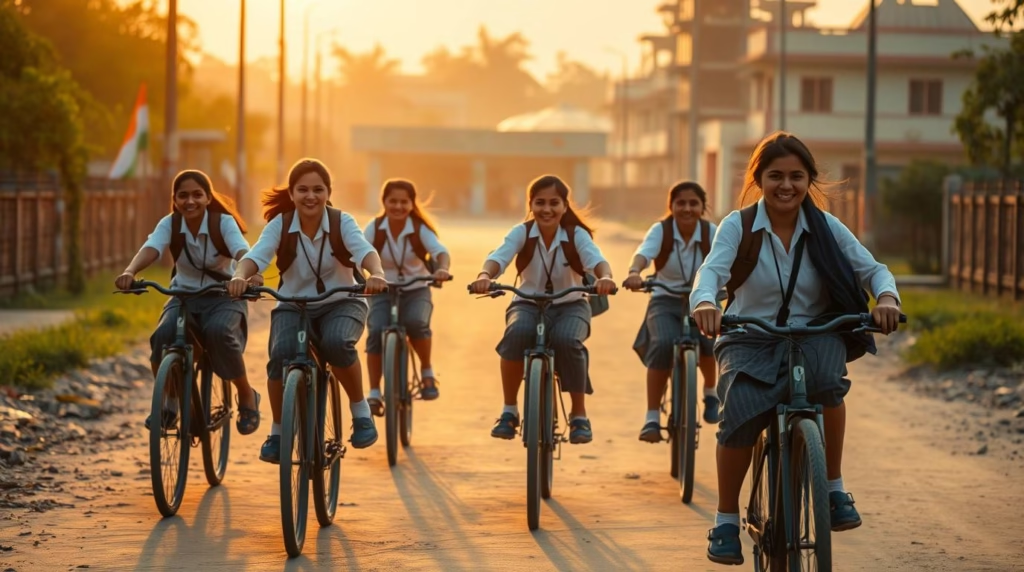
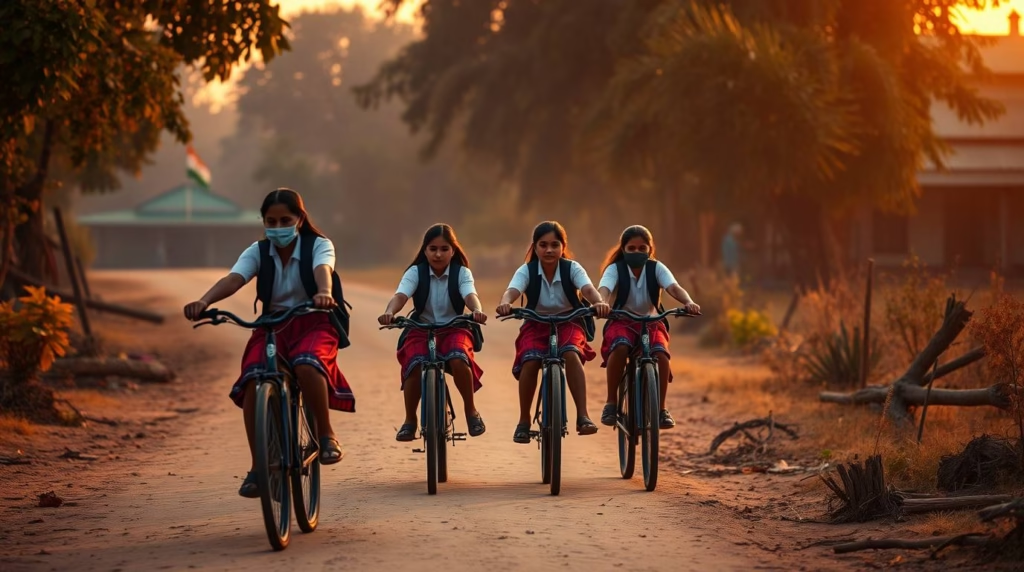
Among the flagship programs that changed the face of student empowerment, the Bicycle Scheme, launched in 2006, stands out as a symbol of Bihar’s educational reform. Originally introduced to encourage girls to attend secondary school, the scheme provided financial assistance to purchase bicycles. It not only eased transportation challenges but also instilled a sense of independence and safety among young female students.
Over time, the program was expanded to cover all students regardless of gender, making it one of the most inclusive mobility schemes in India. To ensure transparency and direct access, the government integrated Direct Benefit Transfer (DBT) into the model. Under DBT, funds are transferred straight into the beneficiary’s bank account, eliminating middlemen and leakages.
This innovative approach increased school attendance rates significantly and became a model for other Indian states. It also encouraged parents to send their children—especially daughters—to schools, improving female enrolment ratios and literacy levels across districts.
Rise in Female Literacy and Gender Parity
Years of gender-focused education policies have led to major improvements in female literacy. Initiatives like the Cycle Scheme, free uniform and book distribution, and hostel accommodations for girls from rural backgrounds bridged the gender gap that once plagued Bihar’s education system.
As per recent reports, female literacy has risen consistently, empowering women socially and economically. With more girls completing school and pursuing higher education, communities are witnessing intergenerational change. Educated women are now contributing as teachers, entrepreneurs, and healthcare workers, inspiring younger girls to follow their path.
The government’s attention to creating safe learning spaces—through better infrastructure, hygienic washrooms, and appointment of female teachers—further strengthened this progress. Gender parity in classrooms has become a hallmark of Bihar’s educational success story.
Technological Transformation: AI and Smart Classrooms
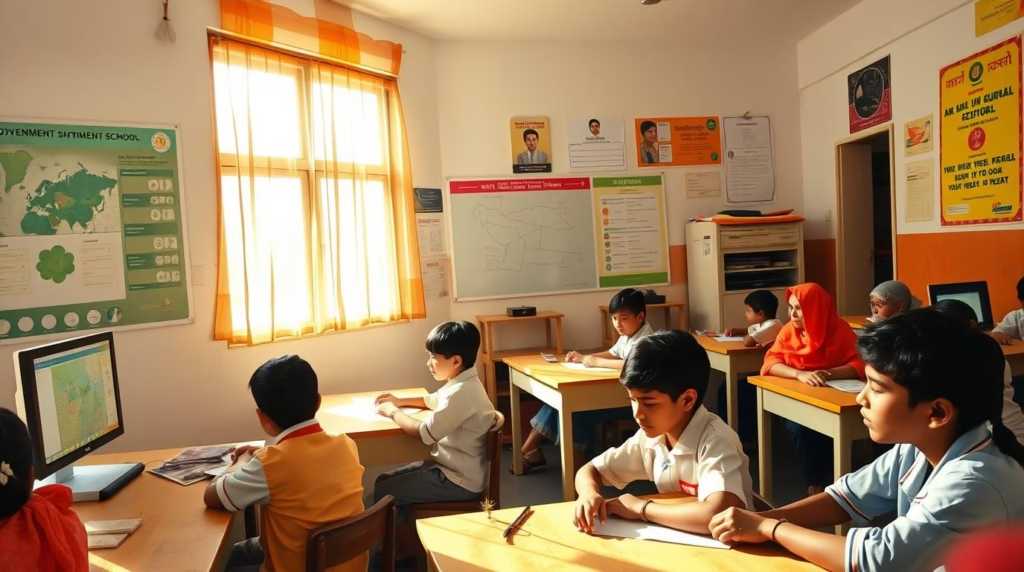
Education in Bihar is not limited to traditional notebooks and chalkboards anymore. Embracing the digital era, the state government introduced AI-based learning modules, smart classrooms, and e-learning platforms to boost digital literacy. These reforms align with the broader vision of preparing students for a future driven by technology.
Through public-private collaborations, schools are now equipped with digital projectors, computers, and interactive tools. Teachers have been trained in virtual teaching methods and digital pedagogy to make classes more engaging. The government’s initiative to establish Digital Learning Hubs in every district has strengthened tech-based learning even in rural schools.
AI-powered learning software helps assess students’ progress and tailor educational content to individual needs. These digital interventions not only make learning enjoyable but also bridge the urban-rural learning divide, ensuring every child in Bihar can benefit from modern tools.
Improved Support and Pay for Non-Teaching Staff
The Nitish Kumar administration recognized that efficient schools rely not only on teachers but also on non-teaching staff who keep day-to-day operations running smoothly. To boost morale and reinforce fair pay, the government doubled honorariums for key support roles.
Under the 2023–24 reforms:
-
Midday meal cooks saw their pay rise from Rs 1,650 to Rs 3,300 per month.
-
Night guards received an increase from Rs 5,000 to Rs 10,000.
-
Physical education and health instructors’ honorariums were raised from Rs 8,000 to Rs 16,000.
These pay revisions uplifted thousands of workers, many of whom come from economically disadvantaged communities. By recognizing their contribution, the state also ensured higher efficiency and satisfaction among school staff, indirectly improving the overall learning environment.
Revitalized Midday Meal and Other Welfare Programs
The Midday Meal Scheme continues to be a central part of Bihar’s strategy to promote regular attendance and better nutrition. New kitchens, improved food safety standards, and oversight committees have enhanced the program’s credibility. The meals not only provide nutrition but also motivate students to attend school regularly, particularly in low-income families.
Additionally, the government expanded student scholarship schemes and hostel facilities for Scheduled Castes (SC), Scheduled Tribes (ST), and Other Backward Classes (OBC), ensuring that economic constraints no longer keep children out of school. Continuous training programs for teachers further strengthen classroom performance and learning outcomes.
Building Inclusive and Modern Educational Ecosystems
Bihar’s educational growth model demonstrates how inclusion and technology can coexist effectively. The state has progressed from basic enrolment drives to implementing smart classrooms and personalized digital learning. Initiatives like student counseling, vocational training, and career guidance in schools exemplify a forward-looking approach to education.
The government has also introduced Education Monitoring Apps that track enrolment rates, attendance, and performance indicators in real time, ensuring data-driven decision-making. Community participation through School Management Committees (SMCs) has encouraged local ownership, transparency, and accountability in school operations.
Moreover, focus on environmental education and extracurricular participation is shaping students into responsible citizens. Planting drives, science exhibitions, and cultural events are now common in schools across Bihar, nurturing creativity and civic awareness among learners.
Looking Ahead: Sustaining Bihar’s Education Momentum
While Bihar has achieved extraordinary progress, the next frontier lies in maintaining this momentum. Bridging gaps in teacher-student ratios, strengthening vocational and technical education, and enhancing digital access in remote areas remain priorities. Continued collaboration with central government agencies and private education partners is crucial to sustaining growth.
The transformation that started with simple schemes—like providing bicycles—has evolved into a comprehensive vision of inclusive, technology-driven, and skill-oriented education. The long-term impact of these reforms is visible in Bihar’s rising literacy rates, emerging skilled workforce, and the declining migration of students to other states for quality education.
Today, Bihar stands as an example of how determined governance, targeted investment, and community involvement can reshape an entire educational ecosystem. Through consistency and commitment, the state has not only reduced dropouts and improved infrastructure but also redefined access to learning for millions.
Bihar’s educational rebirth under the leadership of Nitish Kumar continues to inspire change, overcoming challenges with innovation and ensuring that every child in the state has the opportunity to dream, learn, and succeed.
for more analysis visit BB