Lord Shiva’s deep love for Belpatra (Bilva leaves) is rooted in mythology, symbolism, and spiritual science, and this makes the humble leaf one of the most powerful offerings in Shaivism. Used in temples, homes, and sacred vrat rituals, Belpatra connects the devotee’s heart directly with Mahadev’s grace. When offered with faith, it is believed to purify the mind, balance energies, and invite peace, prosperity, and spiritual upliftment into one’s life.
What Is Belpatra?
Belpatra, also known as Bilva Patra, is the trifoliate leaf of the sacred Bel or Bael tree, traditionally associated with Lord Shiva in Sanatan Dharma. The tree is revered across India and is often found near Shiva temples, where its leaves are plucked with mantras and offered directly to the Shivling.
The word “Bilva” or “Bel” appears in numerous scriptures, where the leaf is repeatedly recommended as one of the most important items in Shiva Puja. Because of this scriptural backing, devotees consider Belpatra mandatory during auspicious days like Sawan Somwar, Mahashivratri, and Pradosh Vrat.
Mythological Legends Behind Belpatra
Ancient texts such as Shiva Purana, Skanda Purana and Padma Purana explain why Belpatra holds such a special place in Shiva worship. One revered legend states that the Bel tree emerged from the divine perspiration of Goddess Parvati, and her energy is said to reside in every leaf, branch, and root of the tree.
Because Parvati is believed to be present in the Bel tree, offering Belpatra to Lord Shiva is symbolically offering the Shakti of the Divine Mother at the feet of Mahadev. In this way, a single Bel leaf represents the union of Shiva and Shakti, and worship with it is thought to bring blessings of harmony, protection, and marital happiness.
The Forest Devotee’s Story
Another popular legend speaks of a simple forest dweller who had no knowledge of formal rituals or Vedic mantras. While wandering in the forest, he would pluck Bel leaves and, in all innocence and love, place them upon a Shivling he came across, not even knowing the rules of Puja.
His devotion was so pure that Lord Shiva, pleased by the sincerity of his heart, granted him liberation from the cycle of birth and death. This story is often shared to remind devotees that Shiva accepts bhava (inner feeling) over outer show, and that even a single Belpatra offered with true love can bring immense spiritual merit.
Belpatra and the Samudra Manthan Legend
A powerful myth linked to Belpatra arises from the episode of Samudra Manthan, the churning of the cosmic ocean. When the deadly poison Halahala surfaced, it threatened to destroy all creation, and Lord Shiva consumed it to protect the universe, holding it in his throat and turning Neelkanth.
The immense heat of the poison spread through his body, and the gods and sages offered cooling Bel leaves to soothe Shiva and calm the fiery energy within him. From that time, Belpatra became especially beloved to Mahadev, symbolising a devotee’s attempt to relieve his pain, share his burden, and serve him with gratitude.
Spiritual Symbolism of the Tri-Patra
Most Belpatra offered in Puja consists of three leaflets joined together, known as Tripatra or Tri-Patra. This form is highly symbolic: the three leaves represent Shiva’s three eyes – the sun, the moon, and fire – signifying knowledge, awareness, and destruction of ignorance.
The Tripatra is also associated with the three gunas of nature: Sattva (purity and harmony), Rajas (activity and passion), and Tamas (inertia and darkness). Placing the three leaves on the Shivling is understood as surrendering all three qualities, ego and tendencies to Shiva, so that he can purify and transform them into higher consciousness.
Connection With Om and the Holy Trinity
Belpatra is deeply linked with the sacred sound Om, which contains the three syllables that correspond to creation, preservation, and dissolution. Devotees see the three leaves as a living symbol of this cosmic vibration, making the offering of Belpatra a silent, physical form of chanting Om at Shiva’s feet.
The Tripatra further represents the Trimurti – Brahma the creator, Vishnu the preserver and Mahesh (Shiva) the destroyer. When a worshipper offers Belpatra, it is considered as honouring all three aspects of divinity, with special devotion to Shiva as the supreme consciousness beyond them.
Inner Meaning: Surrender of Body, Mind and Soul
In many traditions, the three leaves are explained as body, mind and soul. By placing the leaf cluster on the Shivling, a devotee symbolically offers physical actions, thoughts and inner being to Mahadev, seeking guidance, purification and liberation.
This act is treated not as a mechanical ritual but as a moment of deep self-surrender, where personal desires are left aside to align with divine will. Even serious karmic burdens are believed to be lightened when a person offers Belpatra with repentance, humility and consistent devotion.

Belpatra in Ayurveda and Healing Traditions
Beyond its sacred symbolism, Belpatra has a respected place in Ayurveda and traditional medicine. The leaves and fruit of the Bael tree are known for supporting digestion, cooling the body, improving gut health, and helping in certain inflammatory conditions when used under guidance.
Ancient sages, forest dwellers and yogis often depended on Bel leaves and fruit as a protective, strengthening food and herbal support during intense spiritual practices. Because Lord Shiva is depicted as the supreme yogi immersed in meditation, the cooling, balancing nature of Belpatra perfectly complements his fiery ascetic energy, making the leaf a fitting and harmonious offering.
Ritual Use of Belpatra in Shiva Puja
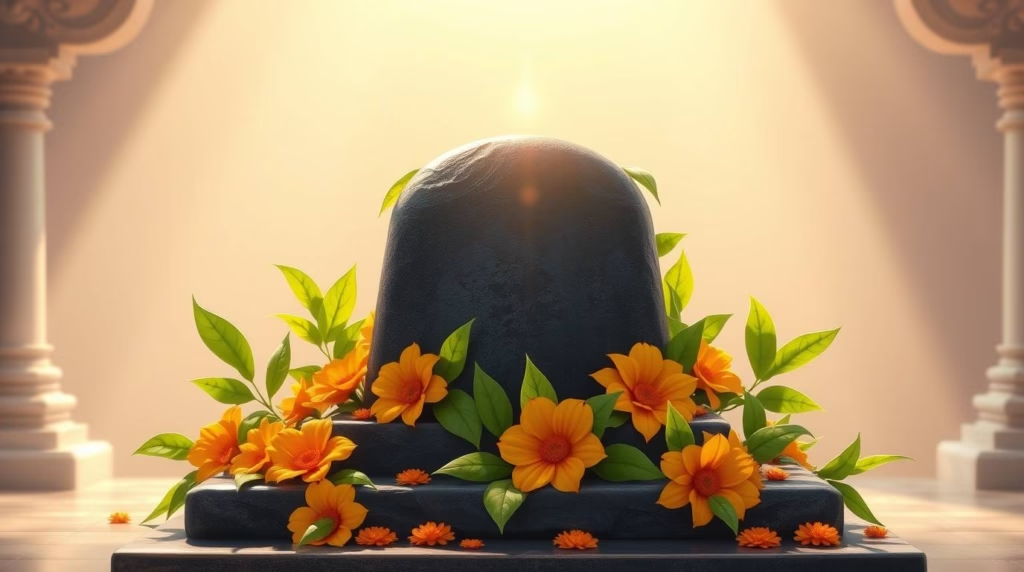
In almost every Shiva temple, Belpatra is offered during Abhishek along with Ganga Jal, milk, curd, honey and other sacred substances. Devotees place the leaves gently on the Shivling while chanting mantras like “Om Namah Shivaya,” creating a powerful combination of sound and symbol that elevates the entire space.
Many priests and scriptures recommend that Belpatra be included in daily worship whenever possible, and especially on Mondays and key tithis linked with Lord Shiva. Those unable to perform elaborate rituals are often advised to simply offer water and a Bel leaf with deep faith, which is believed to be more than enough to receive Shiva’s blessings.
Important Rules for Offering Belpatra
While the essence of Puja is devotion, certain traditional guidelines are followed when offering Bel leaves. Devotees are encouraged to use fresh, clean leaves and to avoid those that are dry, torn, or insect-eaten, as the offering should reflect respect and purity of intention.
Another important rule is the direction of the stem: the stalk of the leaf should face away from the Shivling when placed, which is considered more auspicious in many traditions. It is also customary not to use Bel leaves that have fallen on the ground; instead, they are plucked with care, ideally while chanting Shiva’s name.
Special Power of Monday and Sawan
Monday (Somwar) is widely regarded as Lord Shiva’s favourite day, and offering Belpatra on this day is believed to remove obstacles and bring mental peace and spiritual progress. Devotees fasting on Somwar often complete their worship by bathing the Shivling with water or milk and adorning it with Bel leaves and white flowers.
During the holy month of Sawan (Shravan), the significance becomes even more intense, as millions undertake Kanwar Yatra, carrying Ganga water to pour on Shivlings along with Belpatra. These collective offerings are said to create strong spiritual vibrations, blessing entire regions with rain, prosperity, and divine protection.
Belpatra as a Symbol of Simplicity and Purity
Belpatra is a simple, non-decorative leaf, very different from colourful, fragrant flowers and elaborate garlands. This simplicity mirrors Shiva’s own minimal and ascetic lifestyle, where he adorns ashes, rudraksha, and animal skin rather than luxury and ornamentation.
Because of this, the leaf is often described as the perfect expression of purity over appearance – it is valued not for show, but for essence. Offering Belpatra reminds devotees that Mahadev is easily pleased by sincerity, not by grandeur or material display, and that inner cleanliness matters far more than outer decoration.
Belpatra and Blessings for Devotees
According to various scriptures and traditional beliefs, regular worship with Belpatra can bring numerous blessings. Devotees seek removal of sins, protection from negative influences, healing, prosperity, and spiritual elevation through this simple yet powerful act of offering.
Some traditions even say that worshipping the root of the Bel tree during Shravan and offering water to it grants the merit of visiting many sacred pilgrimages. By honouring both the tree and the leaf, a devotee connects with nature, divinity and inner stillness at the same time, creating a holistic spiritual practice.
Belpatra in Modern Devotional Life
In today’s fast-paced world, Belpatra continues to hold an important place in household and temple rituals. Many families keep Bel leaves ready at home, especially during Sawan, Shivratri and Mondays, so that even with limited time they can quickly perform a heartfelt Shiva Puja.
For those living far from temples, simply placing Belpatra before a picture or small Shivling and chanting Shiva’s name is considered a complete act of worship. Spiritual teachers often encourage devotees to use Belpatra as a tool to cultivate regularity in sadhana, gratitude, and remembrance of Lord Shiva in daily life.
Why Lord Shiva Loves Belpatra – In Essence
Ultimately, Lord Shiva’s love for Belpatra lies in its deep symbolic resonance and its role as a bridge between human devotion and divine grace. It represents Shiva’s eyes, the cosmic gunas, Om, the Trimurti, the presence of Parvati, and the devotee’s complete surrender – all contained within three simple leaflets.
When placed on the Shivling with faith, Belpatra is believed to absorb and reflect divine energy, purifying the heart and aligning the worshipper with Mahadev’s boundless compassion. Though small in appearance, this sacred leaf embodies devotion, purity and balance, turning every offering into a direct, intimate conversation with Lord Shiva.
liked this content. Share NOW