6 Sacred Animals in Hinduism: Feared Yet Revered for Their Divine Power
In the rich tapestry of Hinduism, animals aren’t just part of nature—they’re embodiments of divine energy, raw instincts, and cosmic forces. What makes this tradition truly fascinating is how it honors creatures that spark both awe and terror. Snakes that strike silently, massive bulls that charge with unyielding force, elephants that topple trees, playful yet chaotic monkeys, fierce tigers, and watchful dogs—these sacred animals in Hinduism represent the duality of life.
People fear them for their unpredictability and power, yet worship them as symbols of protection, wisdom, and transformation. This balance of fear and faith stems from ancient Hindu philosophy, which views divinity in nature’s wildest aspects. Exploring these revered feared animals reveals profound lessons: true spirituality demands respecting what we can’t tame. Whether you’re delving into Hinduism animal symbolism or seeking spiritual insights, these six icons offer timeless wisdom.
1. The Snake: Hidden Power and Eternal Cycles
Snakes top the list of sacred animals in Hinduism, evoking primal dread worldwide due to their venomous bite and stealthy glide. Yet, in Hindu lore, they coil around Lord Shiva’s neck as adornments of protection and symbolize the Nagas—serpentine deities guarding treasures and underworld realms. This reverence traces back to Vedic texts like the Rigveda, where snakes embody kundalini energy, the dormant spiritual force rising through the chakras for enlightenment.
Why the fear-worship paradox? A snake’s sudden strike mirrors life’s unforeseen challenges, teaching humility before invisible forces. Festivals like Nag Panchami, celebrated across India, see devotees offering milk to snake idols, seeking blessings against poison and misfortune. In mythology, the serpent Vasuki served as the churning rope during the Samudra Manthan, birthing nectar of immortality. Modern interpretations link this to psychology: confronting fears unlocks inner strength. Ecologically, snakes control pests, aligning with Hinduism’s harmony-with-nature ethos. Thus, the snake isn’t a villain but a divine reminder—embrace transformation amid uncertainty.
2. The Bull (Nandi): Disciplined Strength and Devotion
Nandi, the mighty bull and eternal gatekeeper of Lord Shiva, exemplifies controlled power among sacred animals in Hinduism. Towering and muscular, bulls can trample foes or plow fields with equal ferocity, instilling caution in anyone nearby. Ancient Tamils revered them as embodiments of dharma (cosmic order), while Shiva temples feature Nandi statues facing the sanctum, symbolizing unwavering loyalty.
This animal’s sacred status highlights strength demanding respect, not domination. Scriptures like the Shiva Purana describe Nandi as Shiva’s vehicle, embodying virya (vigor) tempered by bhakti (devotion). Bulls represent fertility and stability; their horns evoke Shiva’s trident, warding off evil. In rural India, bulls roam freely during festivals, fed jaggery and grains as thanks for agricultural bounty. Psychologically, Nandi teaches harnessing raw energy—like channeling ambition into purposeful action. Today, amid urbanization threatening cattle, Hindu activists invoke Nandi’s symbolism for conservation. Far from aggressive beasts, these bulls inspire: true power lies in disciplined service.
3. The Elephant (Ganesha): Wisdom with Unrivaled Might
Lord Ganesha, the elephant-headed remover of obstacles, transforms the elephant into Hinduism’s ultimate symbol of intellect fused with brute force. Real elephants dominate landscapes, uprooting obstacles with trunks stronger than steel cables and trumpeting commands that echo for miles. This physical dominance amplifies Ganesha’s spiritual role, as depicted in the Ganapati Atharvashirsha, where he grants success (siddhi) and knowledge (buddhi).
Hinduism revered feared animals like the elephant date to Indus Valley seals showing elephant worship 5,000 years ago. Ganesha’s large ears signify listening to wisdom, his single tusk represents sacrifice, and his modak (sweet) love denotes rewarding discernment. Ganesh Chaturthi, a massive Mumbai festival, sees eco-friendly idols immersed in water, blending devotion with environmental awareness. In business and education, students invoke Ganesha before exams or ventures, trusting elephantine strength to clear paths. This duality warns: wisdom without power falters, but together, they conquer. Elephants remind us—navigate life’s hurdles with smart, steadfast force.
4. The Monkey (Hanuman): Channeled Chaos and Boundless Devotion
Monkeys, linked to the immortal Hanuman, capture playful mischief masking heroic potential among sacred animals in Hinduism. Street monkeys raid homes, swing unpredictably, and bare teeth in defense, mirroring the restless human mind. Yet Hanuman, from the Ramayana, leaps oceans, lifts mountains, and crushes demons, embodying superhuman feats through selfless service.
This contrast is deliberate: the monkey signifies the scatterbrained manas (mind), tamed by surrender to Rama. Temples like Hanuman Garhi in Ayodhya draw millions chanting the Hanuman Chalisa for strength. Historically, monkey armies aided Rama’s victory over Ravana, symbolizing collective devotion. In yoga, Hanuman asanas build focus, channeling “monkey energy” into discipline. Urban India grapples with monkey menaces, yet feeding them bananas honors Hanuman’s legacy. Spiritually, they teach: don’t suppress inner turmoil—direct it toward purpose. Hanuman’s muscular form proves chaotic vitality, when devoted, becomes invincible loyalty.
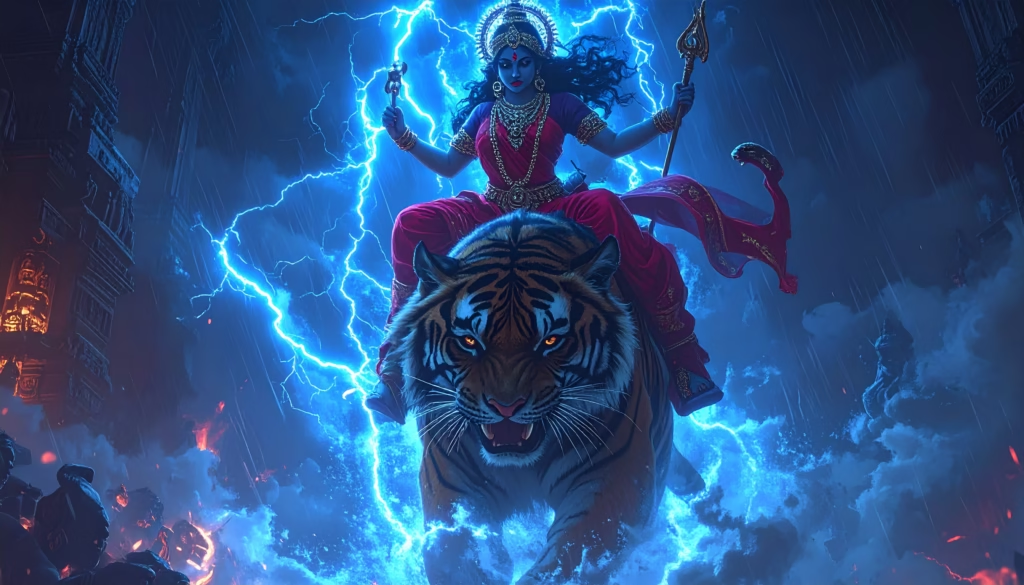

5. The Tiger: Raw Dominance Under Divine Command
The tiger, Goddess Durga’s fierce mount, reigns as nature’s apex predator and a sacred animal in Hinduism that commands distant admiration. With razor claws, thunderous roars, and stealthy pounces, tigers evoke terror, killing silently in India’s Sundarbans mangroves. Durga, wielding weapons atop her tiger (or lion in some texts), symbolizes Shakti—the feminine power conquering evil, as in the Devi Mahatmya.
This pairing underscores mastering primal forces: Durga rides, not fights, the beast, illustrating adishakti’s control over chaos. Navratri festivals feature Durga idols on tigers, with garba dances invoking her protection. Conservation efforts, like Project Tiger, resonate with Hindu reverence, saving these “striped divinities.” Symbolically, the tiger represents ego and aggression subdued by faith. In leadership, it inspires authoritative presence without recklessness. Tigers teach: admire overwhelming power from afar, harnessing it transforms fear into triumph.
6. The Dog: Shadow Guardians of Loyalty and Vigilance
Dogs, companions of Bhairava (Shiva’s fierce form) and Dattatreya, embody loyalty lurking in societal shadows among sacred animals in Hinduism. Stray dogs scavenge alleys, bark warnings at night, and defend fiercely, often shunned as unclean. Yet Bhairava temples feature dog idols, and Dattatreya learned from a devoted dog mother nursing pups.
Kali Purana elevates dogs as protectors against malevolent spirits, with black dogs especially auspicious during Pitru Paksha for ancestral rites. This duality reflects life’s overlooked allies: dogs symbolize faithfulness amid impurity, teaching unconditional bonds. In villages, feeding street dogs invites Bhairava’s blessings. Modern parallels include service dogs aiding the disabled, echoing divine vigilance. They remind us: profound loyalty thrives in margins, guarding what others ignore.
Why These Animals Reshape Our View of Divinity
These six sacred animals in Hinduism—snake, bull, elephant, monkey, tiger, and dog—bridge fear and worship, embedding lessons in daily life. From Shiva’s serpents guarding secrets to Durga’s tiger taming fury, they illustrate Hinduism’s holistic worldview: divinity pulses in nature’s ferocity. In a world of controlled comforts, they urge respecting untamed energies.
Cultural Impact Today
-
Festivals: Nag Panchami, Ganesh Chaturthi boost eco-tourism.
-
Conservation: Tiger and elephant projects align with ahimsa (non-violence).
-
Modern Spirituality: Yoga and meditation invoke their energies for personal growth.
Lessons for Everyone
Embrace duality—fear fuels reverence, power demands purpose. Whether Hindu devotee or curious explorer, these animals inspire balanced living.
Explore Hindu mythology further? Visit ancient texts or temples virtually. Share your favorite sacred animal below!
liked this Article || Visit BB for more