The Profound Symbolism of Curly Hair in Sanatan Dharma Deities
In the rich tapestry of Sanatan Dharma—often known as Hinduism—depictions of gods and goddesses consistently feature one striking visual trait: curly, flowing, or unbound hair. This isn’t random artistry or cultural whim. Why do almost all gods and goddesses in Sanatan Dharma have curly hair? The answer lies deep in philosophical symbolism, where every element of a deity’s iconography carries layers of spiritual wisdom. Hair, crowning the head, acts as a bridge linking the physical body to cosmic energies, embodying the fluid, adaptive essence of divine consciousness.
Sanatan Dharma views the universe as a dynamic interplay of stillness and motion, order and chaos. Rigid straightness symbolizes fixity and limitation, while curly hair in Hindu deities represents life’s inherent flexibility. This curvature mirrors the soul’s journey—bending without breaking, flowing with prakriti (nature’s creative force). Ancient texts like the Puranas and Vedas subtly encode this through visual metaphors, teaching devotees that true divinity isn’t stiff control but responsive grace.
Divine Love Embodied in Curvature and Flow
At the heart of Sanatan Dharma is prema bhakti—unconditional divine love that expands without force. Curly hair symbolism in Hinduism captures this perfectly. Unlike straight lines that demand a fixed path, curls twist and turn, yielding to wind, touch, or gravity. They evoke love’s nature: accommodating, embracing, and ever-adapting.
-
Responsiveness in Action: Curly strands don’t resist; they dance with external forces, symbolizing how divine love absorbs challenges and transforms them into harmony.
-
Contrast with Rigidity: Straight hair might suggest unyielding authority, but Sanatan texts emphasize sauhum (gentleness) even in power. Love that can’t bend shatters under pressure—curls teach endurance through flexibility.
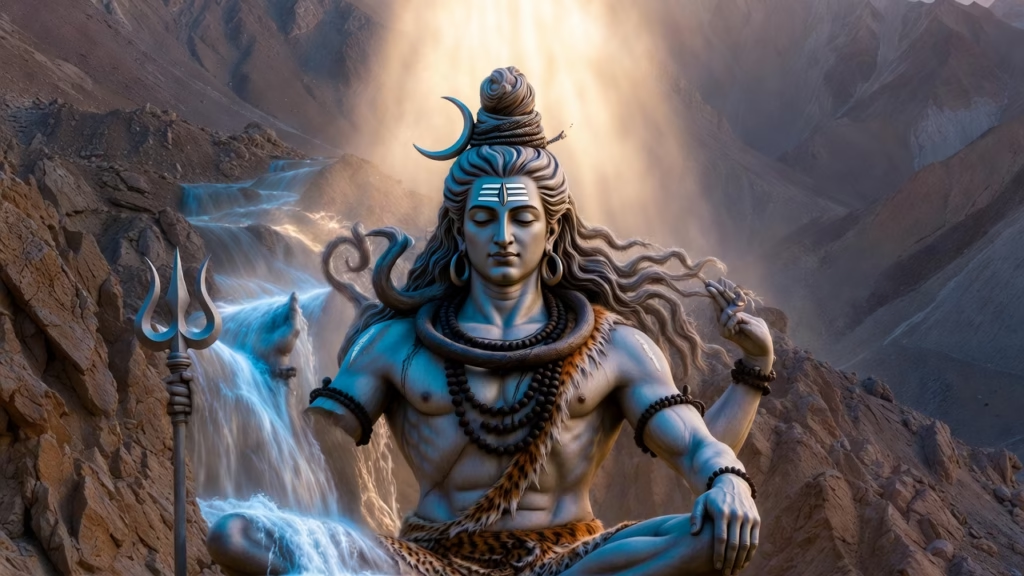
This principle applies across genders. Even fierce masculine deities like Shiva retain this softness, proving that ultimate strength lies in adaptability. In everyday life, humans gravitate toward such traits instinctively—soft, wavy hair signals warmth, safety, and emotional depth, forging an intuitive bond with the divine.
Hair as an Extension of Prakriti: The Cosmic Dance
In Sanskrit philosophy, hair transcends biology. Post-infancy, it serves no survival function, positioning it as pradeśa—an extension of prakriti, the feminine principle of creation, preservation, and dissolution. Hindu deities hair symbolism thus portrays the universe’s rhythmic flux, not static perfection.
Scriptural examples abound:
-
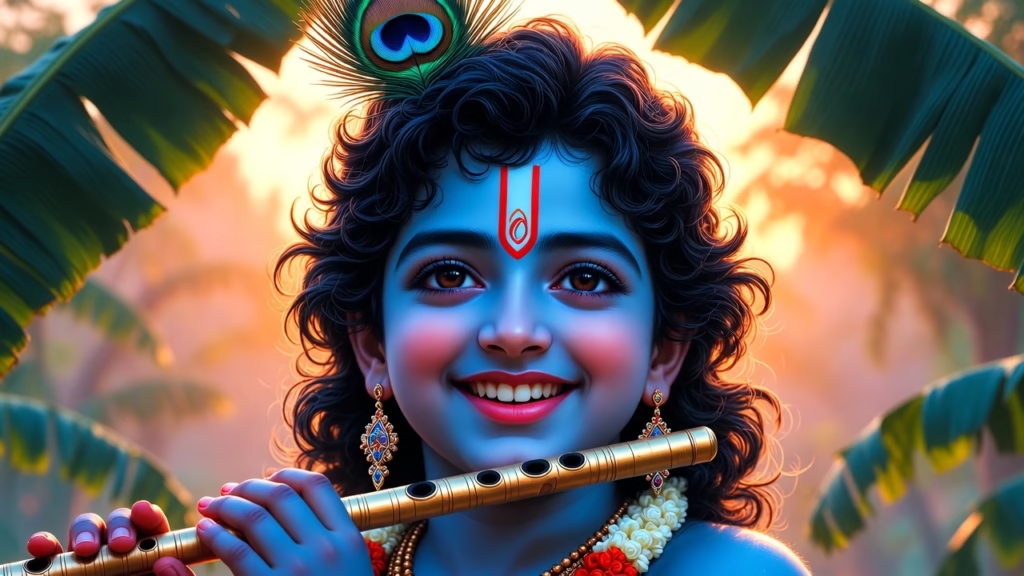
Lord Krishna’s Cancuła Locks: The Bhagavata Purana describes Krishna’s curls cascading over his forehead, playfully veiling his mischievous smile. These Krishna curly locks significance highlight lila (divine play)—an ever-unfolding drama inviting participation, not distant observation. His hair sways with his flute music, drawing devotees into ecstatic surrender.
-
The Eternal Rhythm: Curly hair evokes the cosmic tandava (dance), where creation pulses like waves. This counters inert matter, affirming Sanatan Dharma’s view of existence as vibrant shakti (energy).
Historically, temple sculptures from the Gupta era (4th-6th century CE) amplify this, with intricate curls carved to suggest motion, even in stone. Modern interpretations link it to quantum physics’ wave-particle duality—reality as probabilistic flow, not rigid particles.
Balancing Chaos and Order: Unity of Opposites
Sanatan Dharma embraces paradox, sanctifying both discipline and wildness. Sanatan Dharma gods curly hair often blurs these lines, revealing cosmic intelligence in apparent disorder.
| Deity | Hair Style | Symbolic Meaning |
|---|---|---|
| Shiva | Jata (matted, twisted locks) | Wild chaos tamed; Ganga’s descent through his hair purifies worldly descent into enlightenment. Shiva jata meaning = restrained fury holding cosmic rivers. |
| Durga/Kali | Unbound, flowing tresses | Raw shakti—fierce, untamed energy that destroys illusion without domestication. |
| Krishna | Playful curls | Spontaneous joy; beauty that’s approachable, not aloof perfection. |
| Lakshmi | Soft waves | Prosperity’s gentle abundance, flowing like wealth’s natural current. |
This motif recurs in Vedanta: the world (maya) isn’t illusion to reject but a leela tapestry weaving dharma (order) and freedom. Shiva’s jata, for instance, binds serpents and the moon—symbols of poison and time—into purposeful harmony. Goddesses’ wild hair unleashes transformative power, reminding us that true order emerges from dynamic tension.
The Magnetic Allure: Hair as Divine Charisma
Deity images aren’t for cold reverence; they’re crafted to stir the heart. Curly hair in Sanatan Dharma generates vaishnava ankura—spiritual magnetism pulling souls toward the eternal.
Two dimensions stand out:
-
Bhakti’s Awakening Tool: In Vaishnava traditions like those of the Garga Samhita, Krishna’s cheek-framing curls aren’t cosmetic. They pulse with prema rasa, igniting viraha (longing) that refines devotion. Static beauty fatigues the eye; dynamic curls demand engagement, mirroring how divine love captivates.
-
Human-Divine Bridge: Psychologically, textured hair signals vitality—alive, sensuous, unpredictable. Evolutionary biology echoes this: healthy curls denote genetic vigor. Thus, deities feel relatable, awakening smarana (remembrance) of our own divine spark.
Temples worldwide, from Vrindavan’s Krishna shrines to Kailash’s Shiva lingams, amplify this through abhisheka rituals, where water flows over hair-like motifs, invoking attraction.
Hair and the Subtle Layers of Consciousness
Beyond the physical, Sanatan Dharma sees humans as koshas (sheaths): annamaya (body), pranamaya (energy), manomaya (mind), and beyond. Hair emerges from sahasrara chakra—the crown portal to higher awareness—acting as a subtle antenna for prana (life force).
-
Mental Impressions Visualized: Each curl represents samskaras (impressions) in flux, dynamic mind unbound by ego’s straightjacket.
-
Elevated States: Flowing hair on deities like Vishnu’s avatars signifies expanded consciousness—open, expressive, attuned to brahman.
In yoga texts like the Hatha Yoga Pradipika, unbound hair during meditation channels kundalini upward. Divine icons thus model this: symbolism of curly hair in Hinduism as consciousness in motion, urging devotees to transcend rigidity for fluid enlightenment.
Accessibility and the Rejection of Austerity
Puranic lore, such as the Harivamsa and Bhägavata Puräna, lavishes detail on Krishna’s curls, calling them cancala-kesha—restless tresses unique to his charm. This counters ascetic stereotypes: divinity isn’t detached renunciation but immersive celebration.
Key teachings:
-
Intimate Approachability: Curls make gods “human-like” yet transcendent, fostering sahachari bhava (companionate love).
-
Beauty as Pathway: Far from superficial, it’s sundara—divine radiance lifting from mundane irritation to awe.
-
Modern Relevance: In today’s stressed world, this symbolism promotes mental flexibility, resonating with mindfulness practices rooted in Dharma.
From South Indian bronzes to Rajasthani miniature paintings, artists across millennia reinforce this, ensuring Hindu deities hair symbolism endures as a call to embrace life’s curls.
Ultimately, curly hair signifies divine accessibility: supreme yet playful, powerful yet soft. It whispers that enlightenment isn’t a straight path but a joyful spiral, drawing us home.